
You’ve got goals. Your YouTube channel may have started as a fun hobby, but you want to grow it into something that feels real (and maybe even helps pay the bills).
Or, maybe you want to build a channel that helps promote your business.
Either way, you may have heard that on YouTube, subscribers don’t matter as much anymore.
That’s partially true, but it’s missing a key point.
YouTube’s own guidance says that subscribers aren’t the same as your active audience.
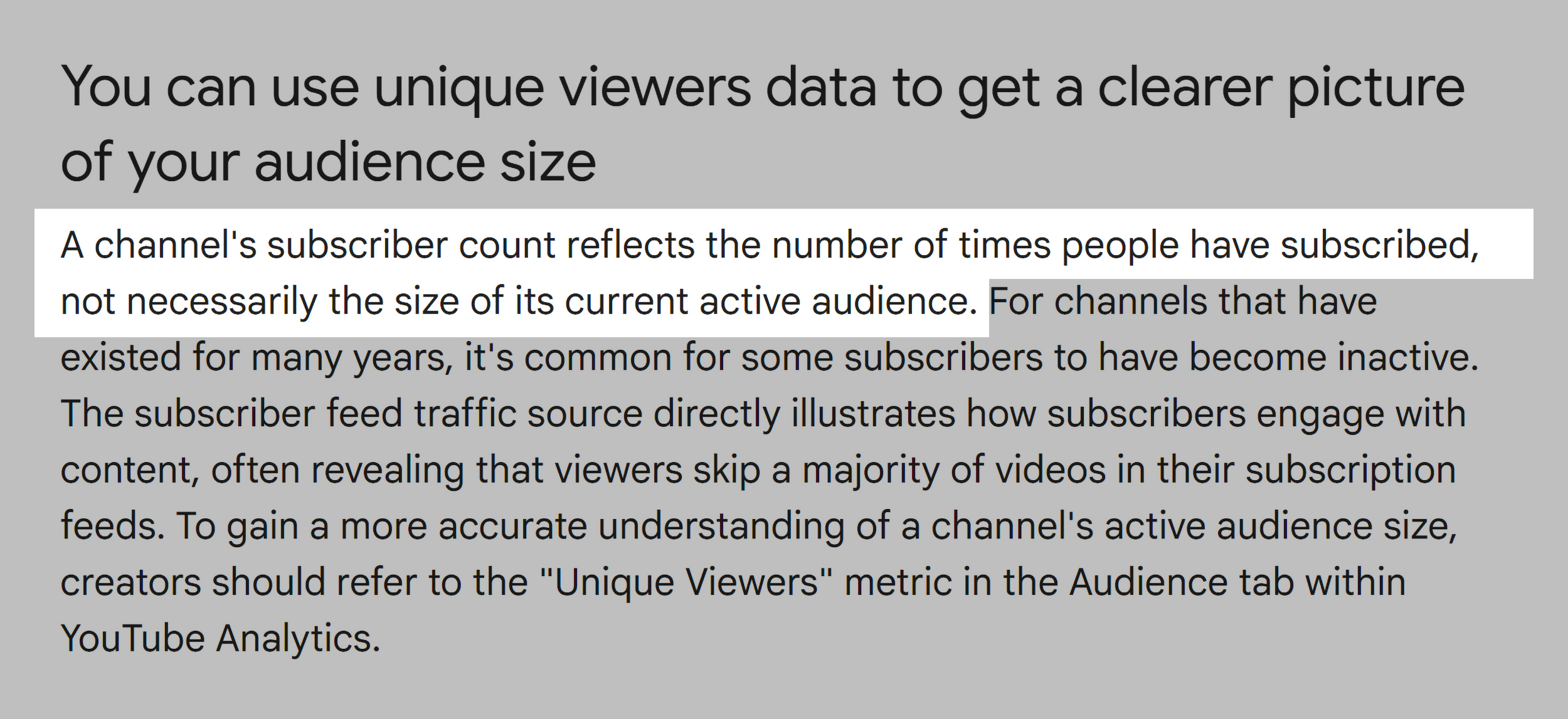
And subscriber count alone doesn’t dictate whether a video will be recommended more.
But there are two reasons why subscribers still matter in 2026.
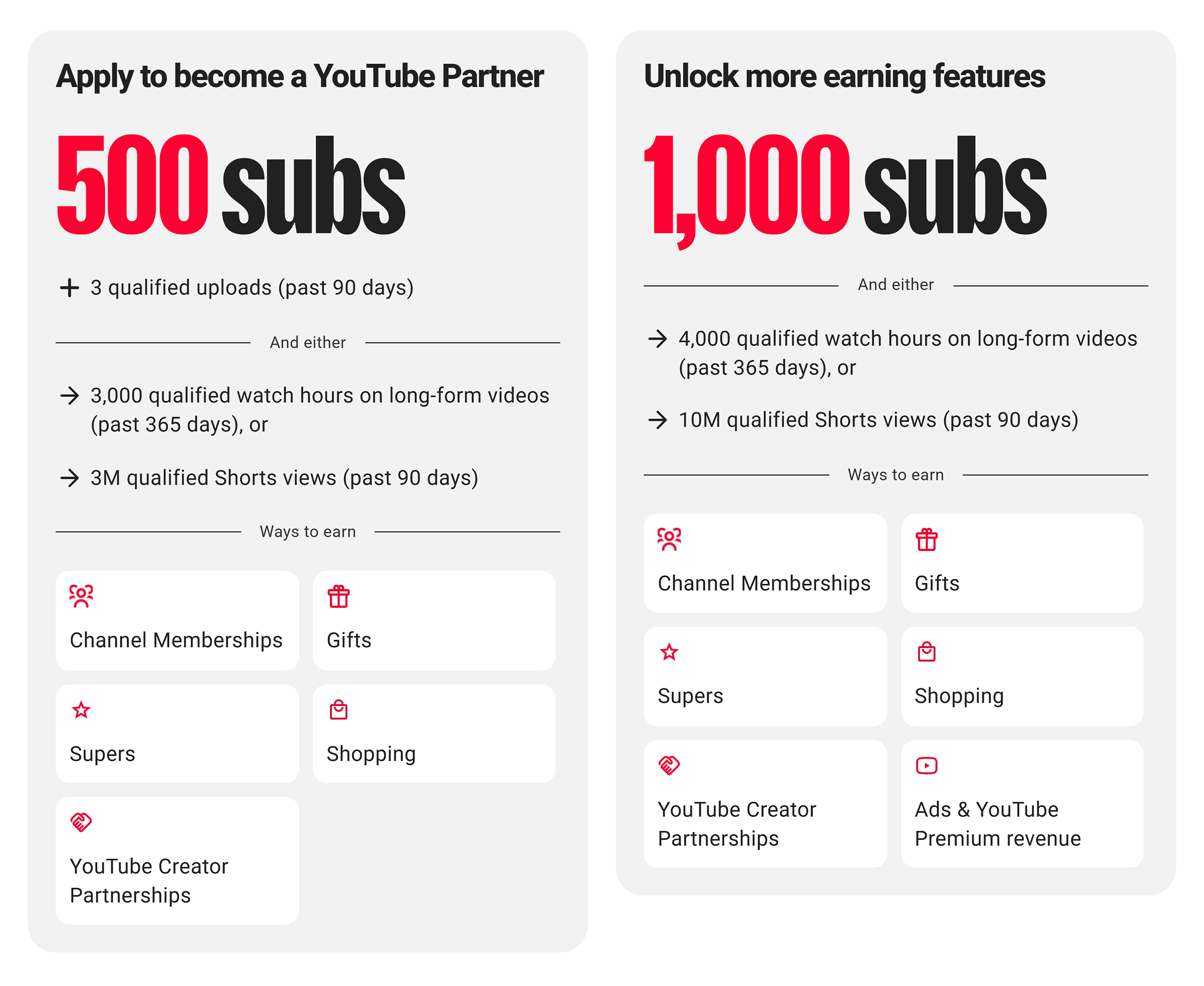
First, because you’ll need at least 500 subscribers (along with watch time thresholds) to access fan funding features with the YouTube Partner Program.
When you reach 1,000 subscribers and have enough channel watch time, you can also unlock monetization with ads revenue.
And second, subscribers act like an owned audience to your YouTube channel.
In a lot of ways, it’s similar to having an email list. These subscribers get notifications for every new upload. When you work to keep them interested in your content, they can give you an early burst of views and engagement for new uploads (which can, in turn, help with reach).
The goal in 2026 is to build a loyal, compounding audience who not only subscribe to your channel, but also get excited every time you drop a new video.
In this article, you’ll learn a beginner-friendly system for turning viewers into loyal subscribers. It runs from making videos worth watching, to setting up your channel to convert, to building a real community around what you make.
1. Post Consistently
The foundation to YouTube growth is consistency.
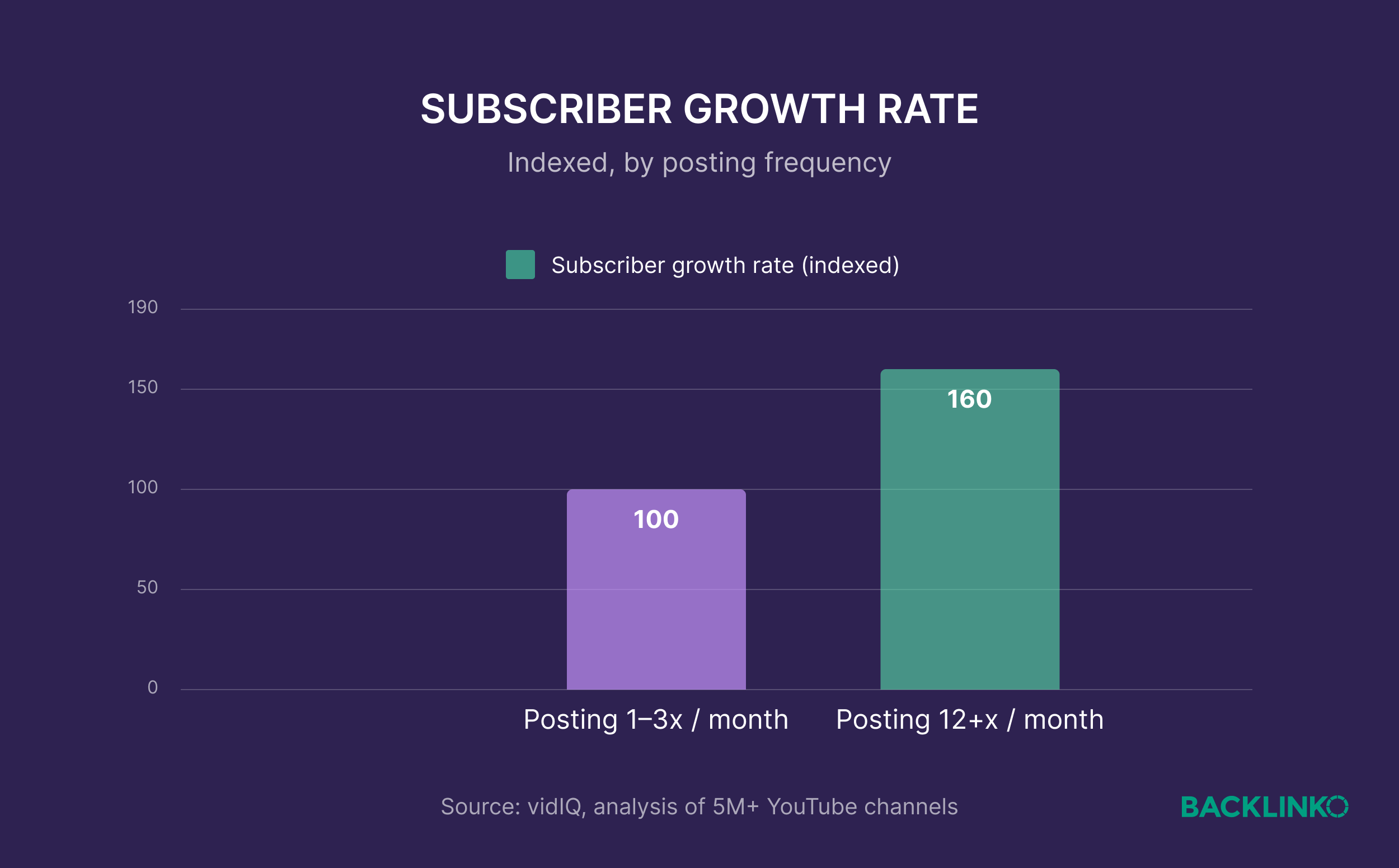
In one study, vidIQ found that creators who post 12 or more times per month gain subscribers 66% faster than those who post 1-3 times per month.
Here’s how to build that consistency.
- Batch your filming: Record a few videos in one sitting instead of one at a time. That removes the setup and warm-up time that makes weekly filming feel impossible.
- Keep a content buffer: Life happens, so be ready for it in advance. Stay a few videos ahead so a busy week doesn’t break your streak.
- Plan in a content calendar: Map topics and publish dates in advance so no upload is a last-minute scramble
- Schedule uploads ahead of time: Queue finished videos in YouTube Studio to publish automatically
How many videos do you actually need to get to 1,000 subscribers?
There’s no magic number, but another vidIQ study found that 68% of channels that reached 1,000 subs had more than 40 videos.
Obviously, producing that many videos takes time. Put in the work early so consistency becomes a habit.
That’s how productivity creator Ali Abdaal got his first 1,000 subs in six months. His simple rule is to publish every week, and get a little better each time.
As he puts it, the results of consistency “happen very, very slowly and then very, very fast.”
Seven years after starting, his channel now sits at 6 million subscribers.
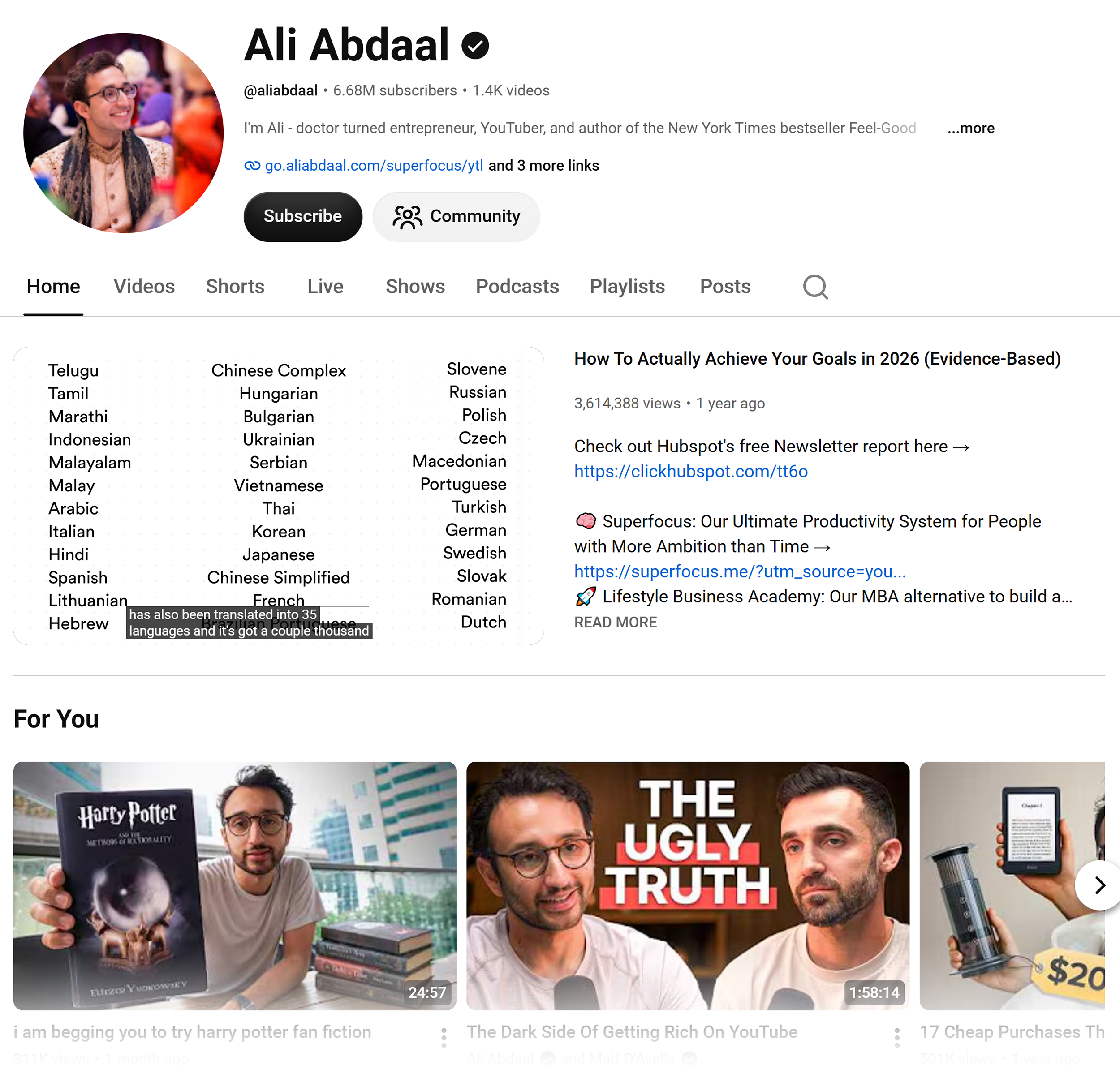
So, build a schedule to post regularly, whether that’s weekly, biweekly, or more.
To decide that cadence, ask yourself: How often can I upload while sustaining the quality of each video?
2. Make Videos People Want More of
Posting consistently only works if each individual video is worth watching. One weak video may not sink you, but a channel full of them gives new viewers no reason to stick around.
In 2026, there are three main things that drive quality.
- Your idea sets you apart
- Your packaging (the title and thumbnail) earns the click
- The delivery (your hook + viewer satisfaction) earns the subscribe
What happens when you consistently nail these three things?
As YouTube puts it:
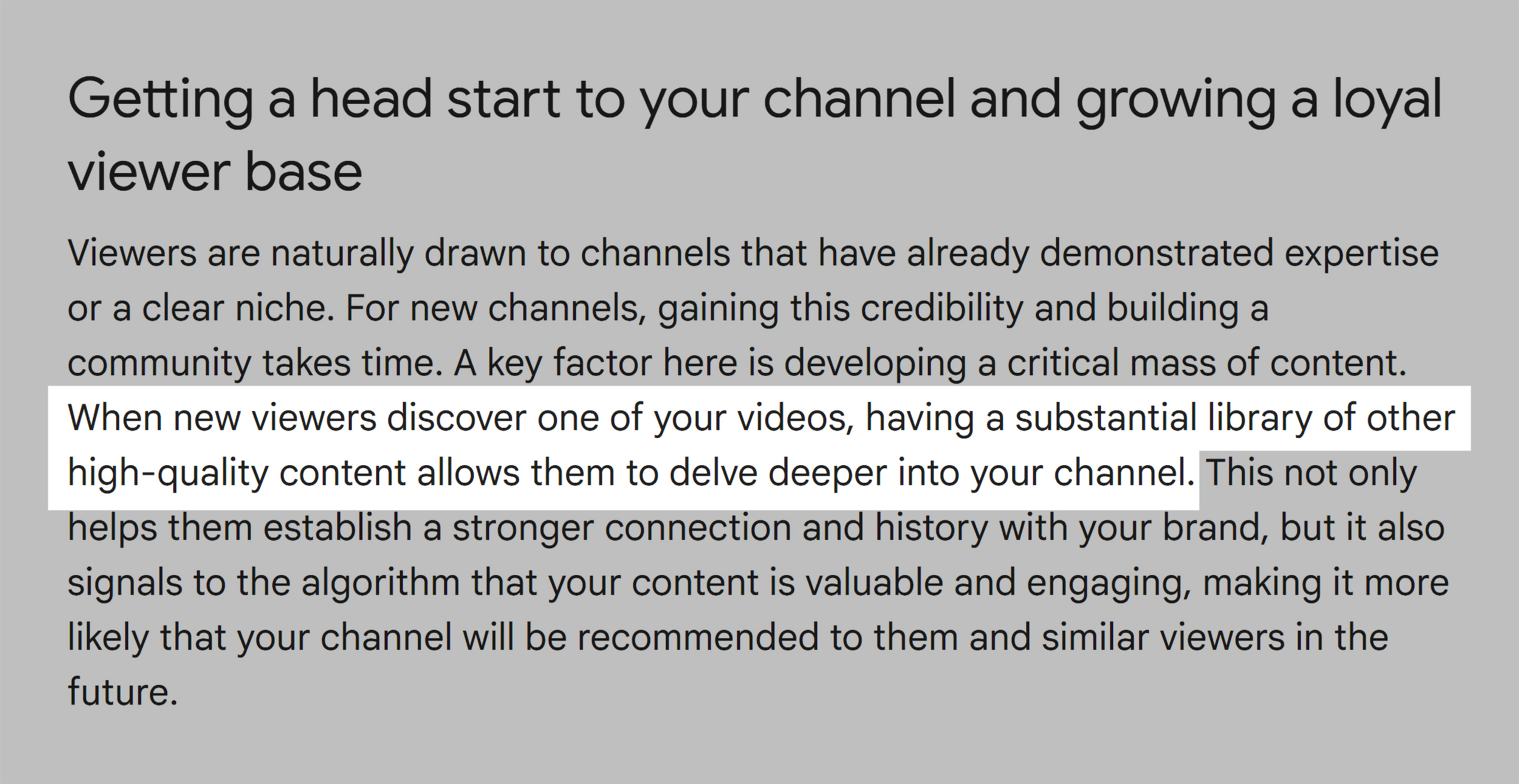
For example, a new viewer lands on a running video from The Running Channel.
Then they find hundreds more — training plans, gear reviews, race tips — and subscribe to keep them coming.
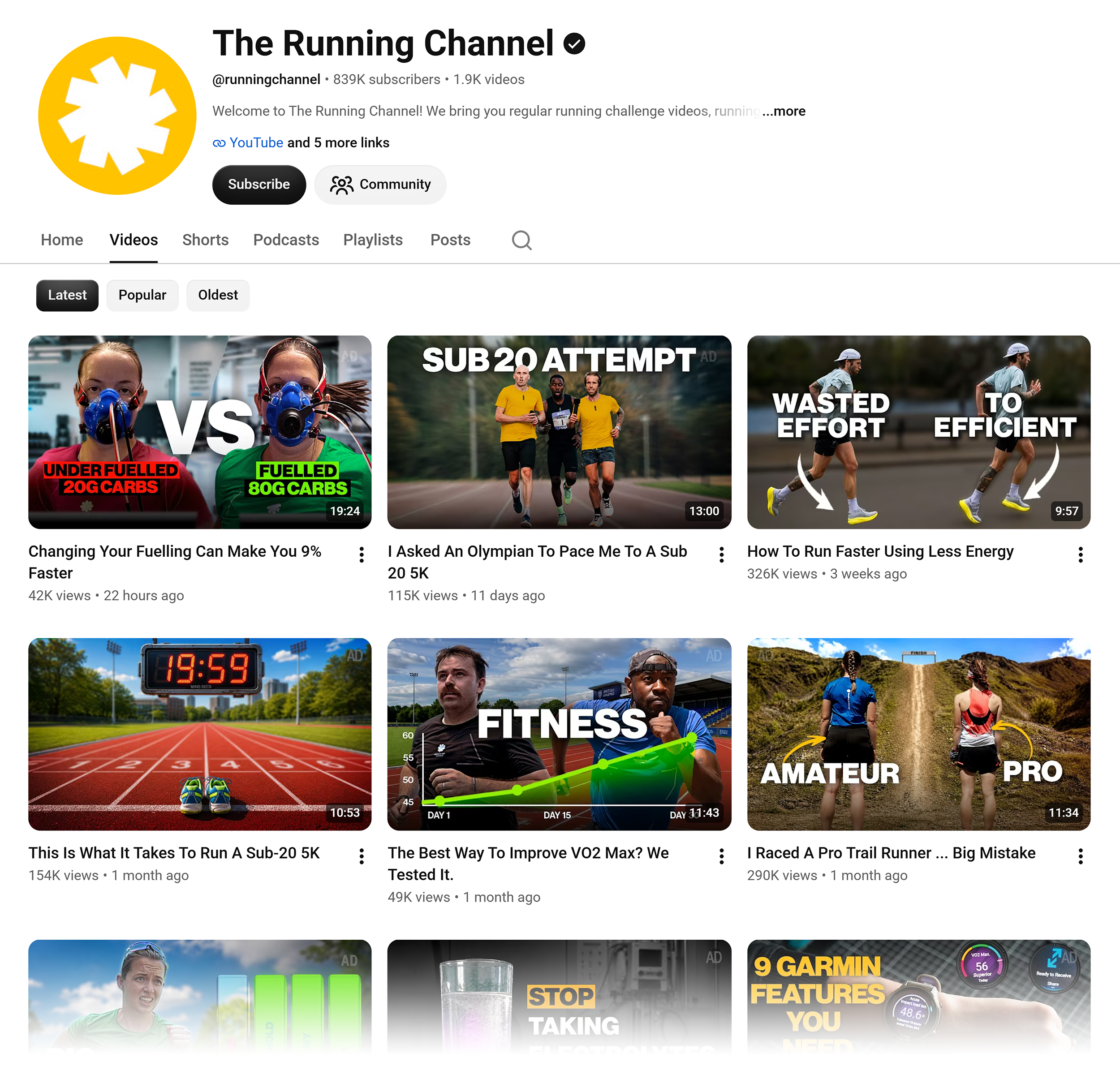
To do this, start with the idea. The best ideas pair proven demand with a specific angle.
For example, The Running Channel team answers questions runners are already typing into search, like “how to start running” or “how to improve your 5K time.”
But the ideas are what make those videos stand out: from fun and crazy challenges to expert advice from pro runners.

Then comes packaging, your title and thumbnail.
That’s the promise you make before anyone clicks, so write it before you film and build the video on how to deliver on it.
Some best practices:
- Use expressive faces in your thumbnails
- Keep your title concise, under 60 characters
- Front-load your keywords
- Use some minimal text in your thumbnail to complement the text in your title
Don’t try to stuff too much text or too many visuals into your thumbnails. Clear and concise is much better to draw in viewers.

Whatever your niche, the pattern holds. Earn the click with a sharp idea and an honest promise, then deliver so well that one video turns into a binge.
3. Give Your Channel a Clear Promise
What do subscribers get from your channel?
The answer to that question is your positioning.
Having a clear channel promise or position is more important now than it used to be. With each video judged and recommended by YouTube on its own merit, a clear niche is what tells both viewers and the algorithm who your channel is for.
As YouTube’s best practices page says:

“Viewers are naturally drawn to channels that have already demonstrated expertise or a clear niche.”
Start by naming ONE thing that makes your channel different.
Maybe you’re a busy mom who can deadlift 500 pounds.
Maybe your channel focuses on SaaS SEO to help companies increase their revenue.
Find what makes you unique in your niche. This is called your channel tagline.
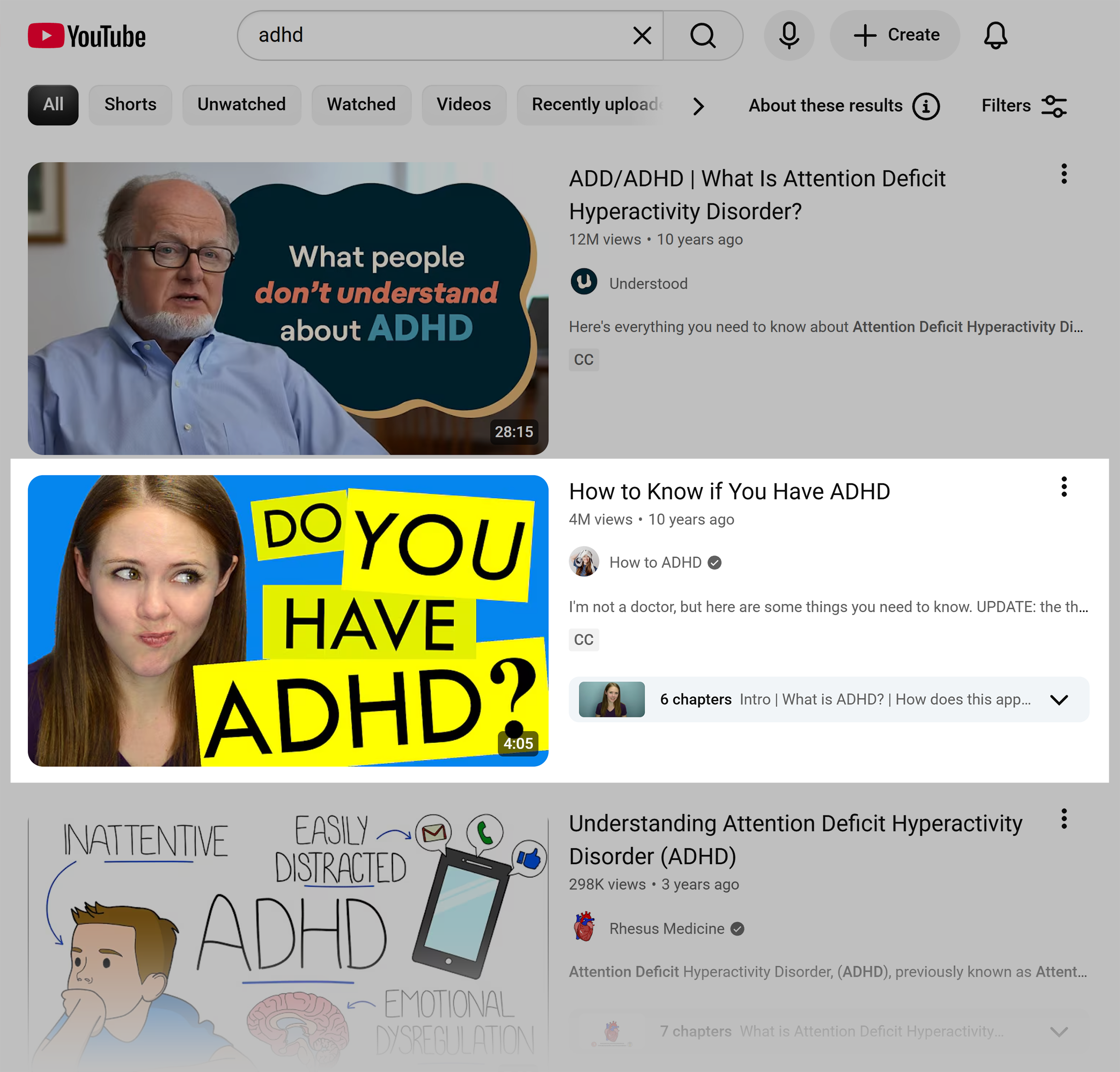
For example, the channel How to ADHD from Jessica McCabe promises evidence-based tools and information to empower ADHD brains.
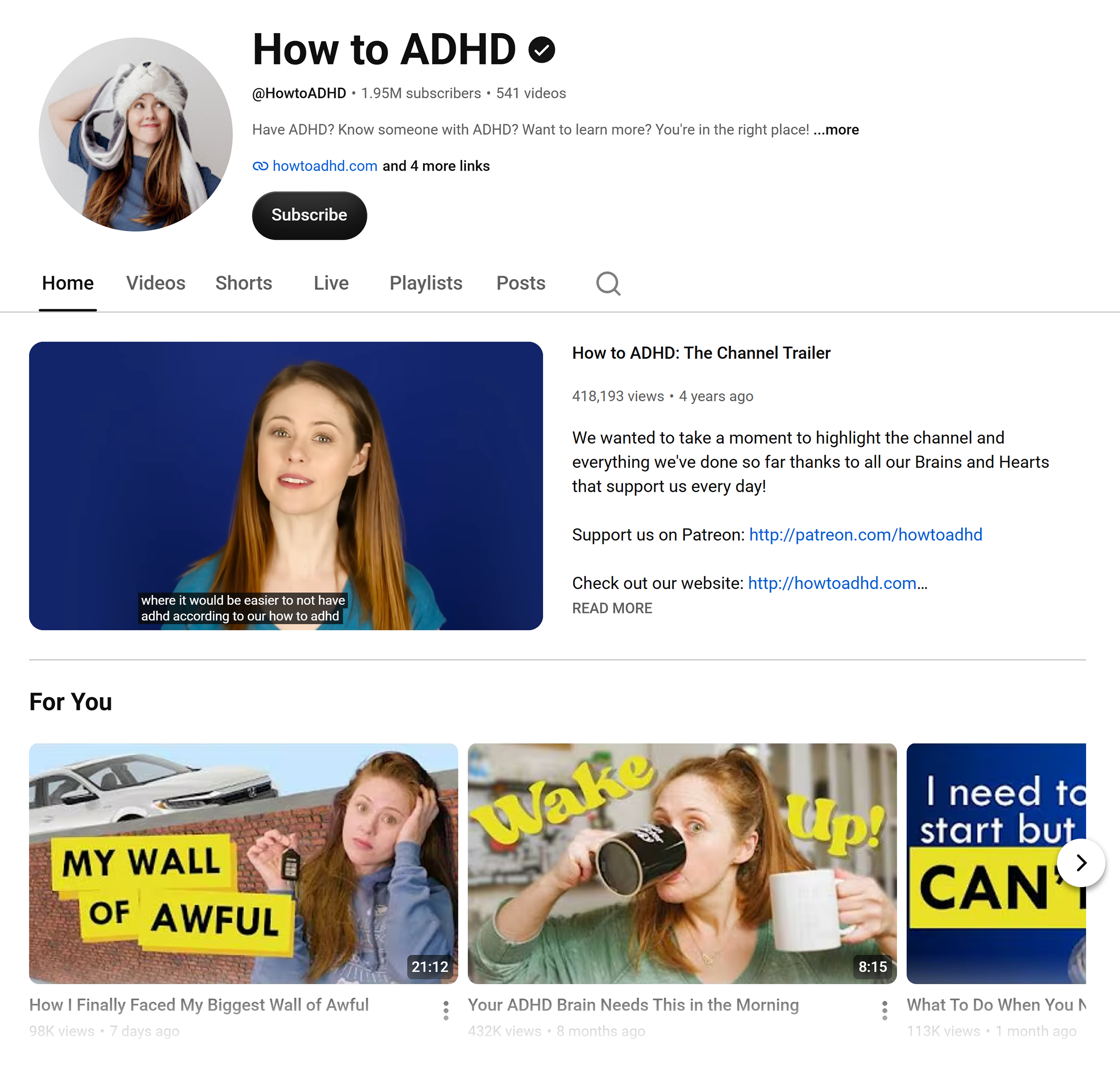
That’s a powerful tagline for her audience.
So, where do you use a tagline?
First, make sure it’s included in your banner image (or channel art).
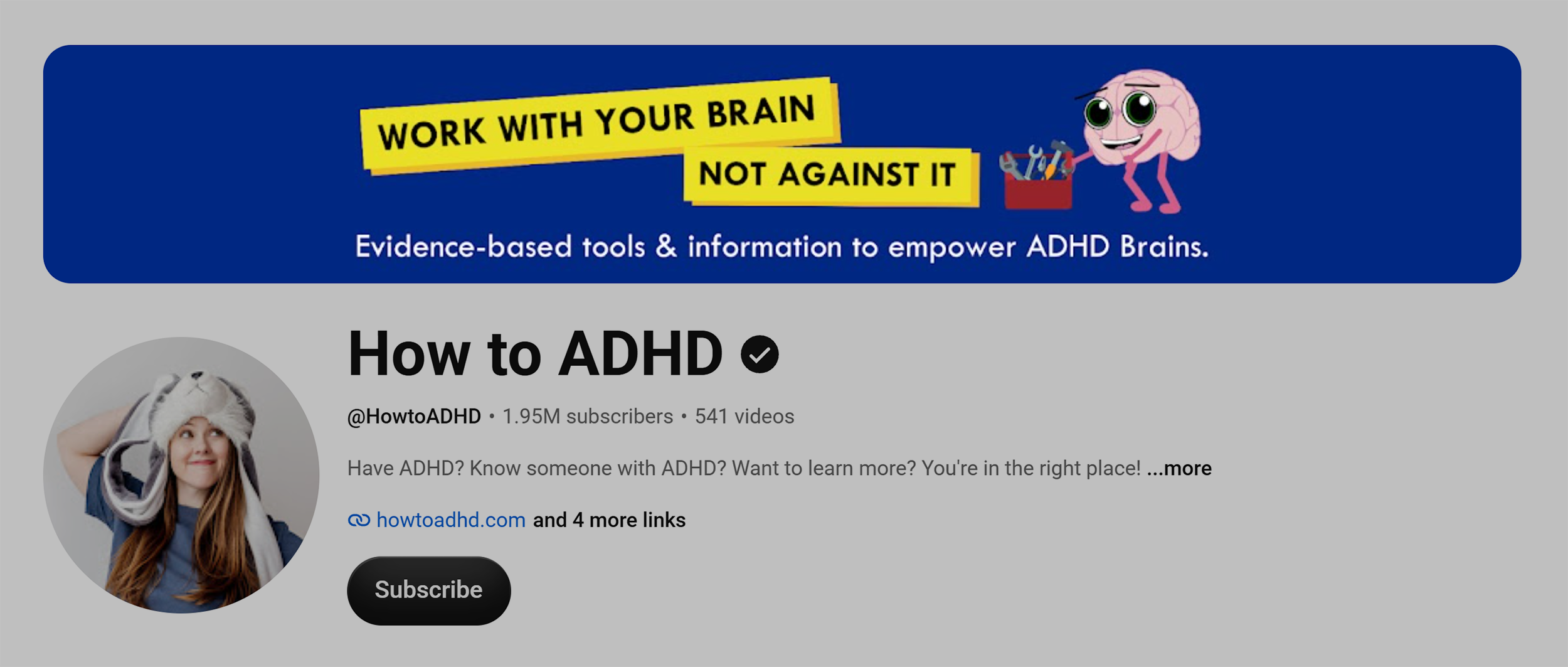
Next, mention the idea in your channel trailer.
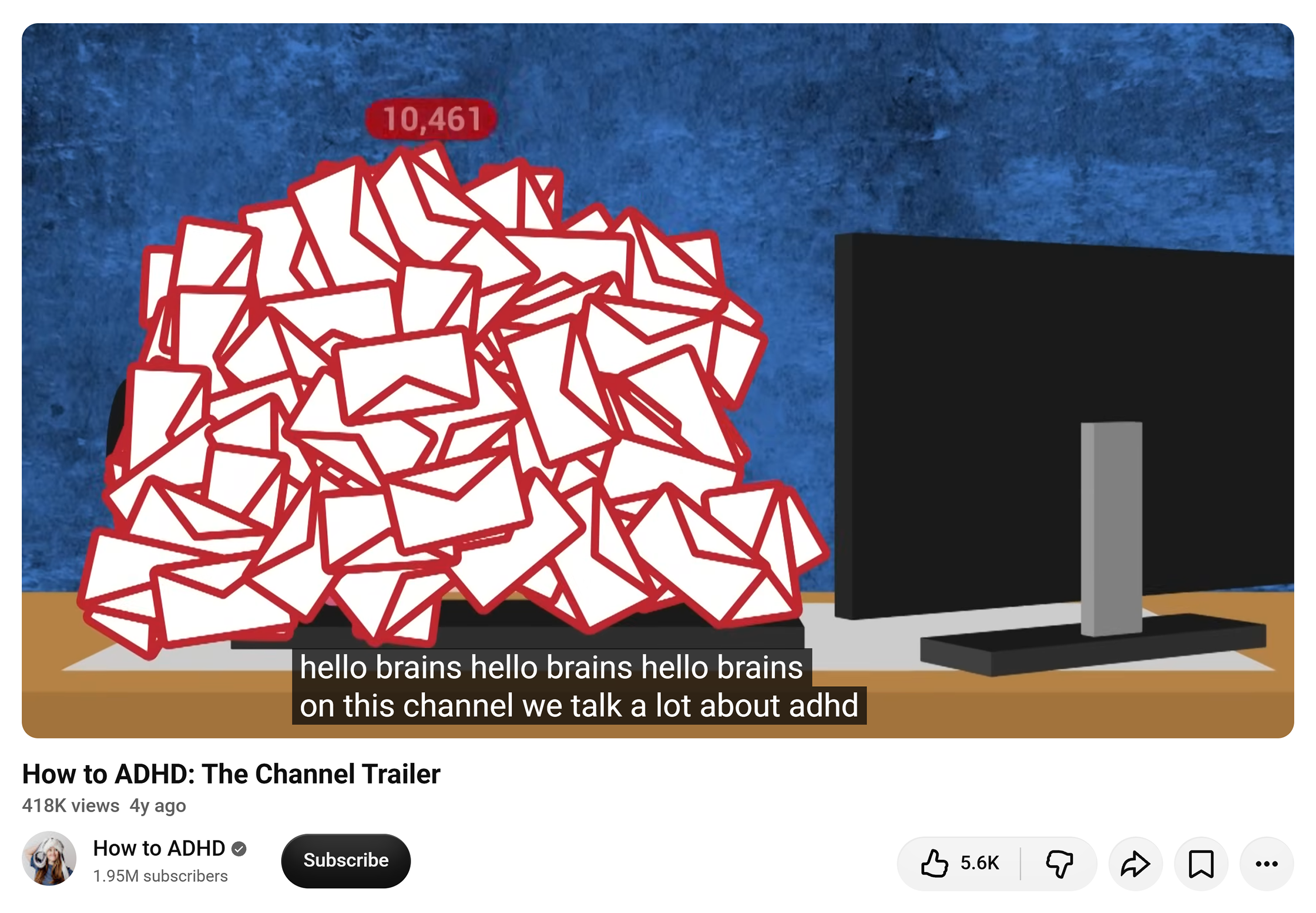
You can also add a nod to your channel tagline in each video.
It might be in the description, or it could be when you introduce yourself and your channel in the video itself.
Jessica also does this in some of her videos:
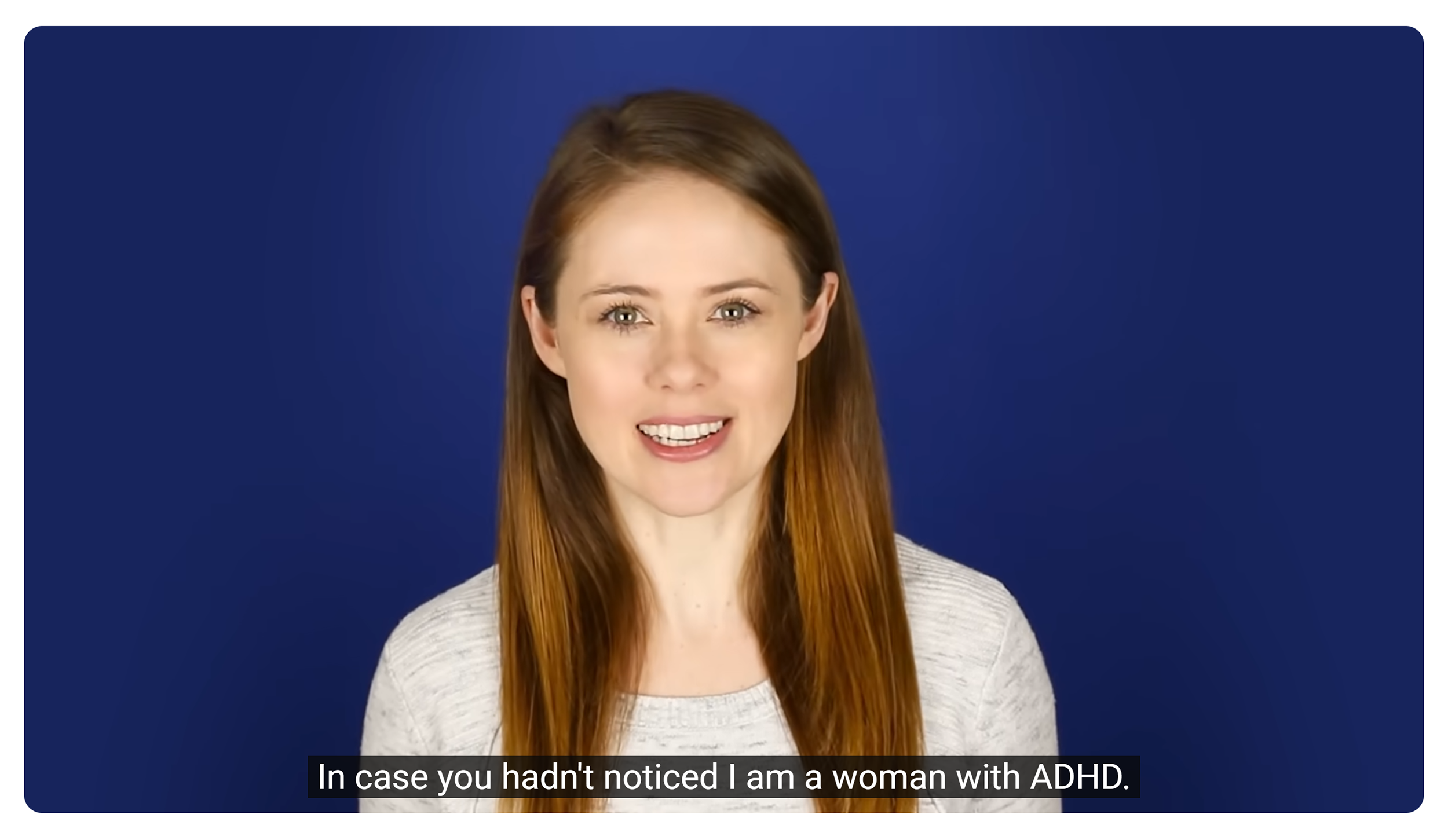
Finally, use an expanded version of your main positioning inside your channel description.
A strong channel description does three things.
- Says what the channel is about
- Tells viewers how often you post
- Ends with a clear reason to subscribe
A few relevant keywords here can also help you surface in YouTube search.
Jessica’s channel description for How to ADHD hits all of these points.

And one of her videos shows up right at the top for the query “ADHD.”
The goal is to make the promise obvious, then keep it on every screen a new viewer checks.
4. Set Up Your Channel Page to Convert
Your channel page is where curious viewers decide whether to subscribe. So make that choice easy on every screen they see.
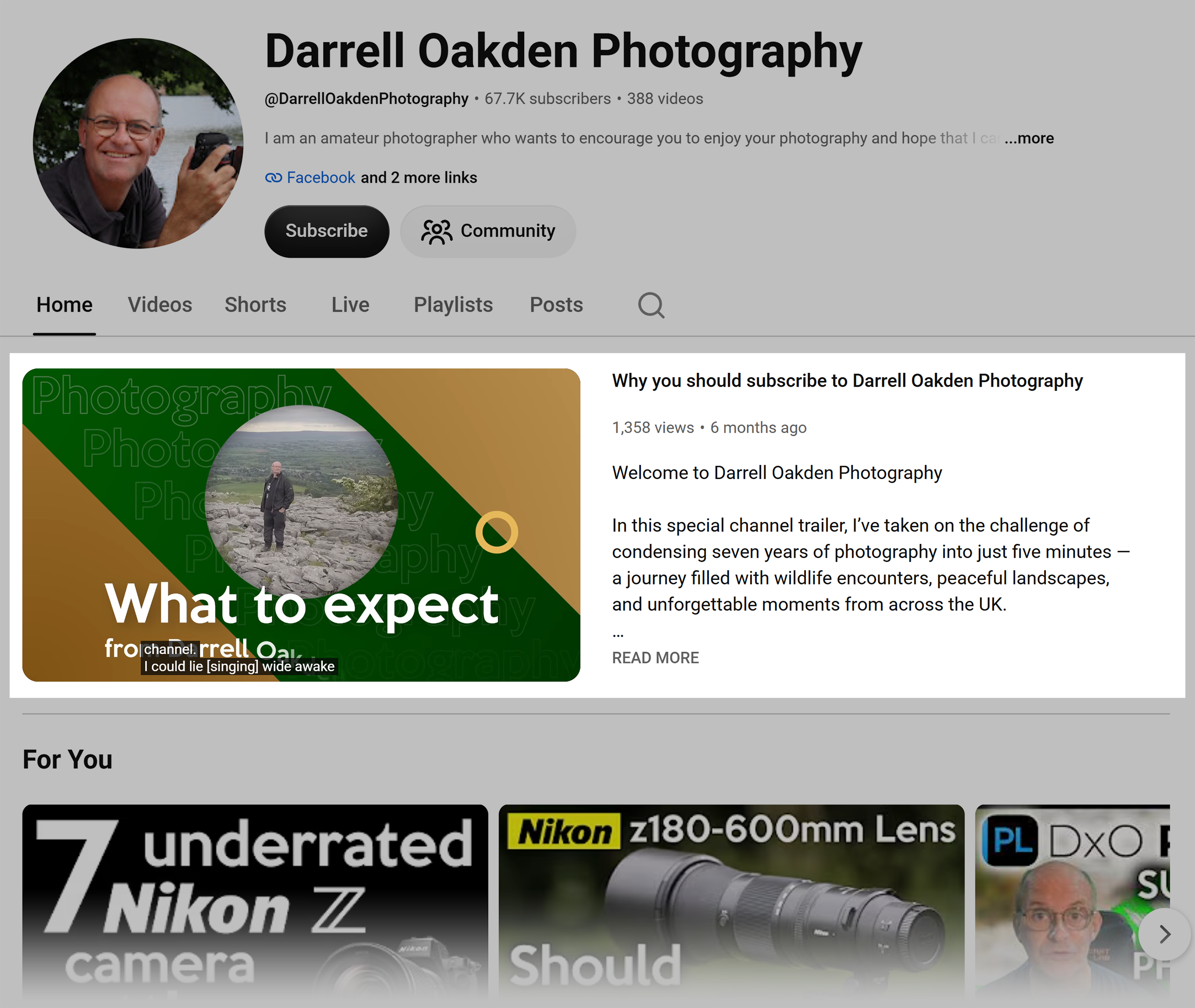
Start with your trailer, the one video that autoplays when someone arrives at your channel page. Open with a promise, keep it under a minute, and use the middle as a 20-30 second highlight reel of your best clips.
For example, photography creator Darrell Oakden uses his trailer to highlight what kind of content viewers can expect on his channel.

Pro tip: You can now set two videos in YouTube, one for new visitors and a separate Spotlight video for returning subscribers. Use the first to convert newcomers, and the second to point existing fans toward your latest upload or a current series.
Another place people can subscribe is within your videos. Add a watermark to your videos to encourage people to come back to your channel.
For example, see how Notion includes their brand logo watermark in their videos.
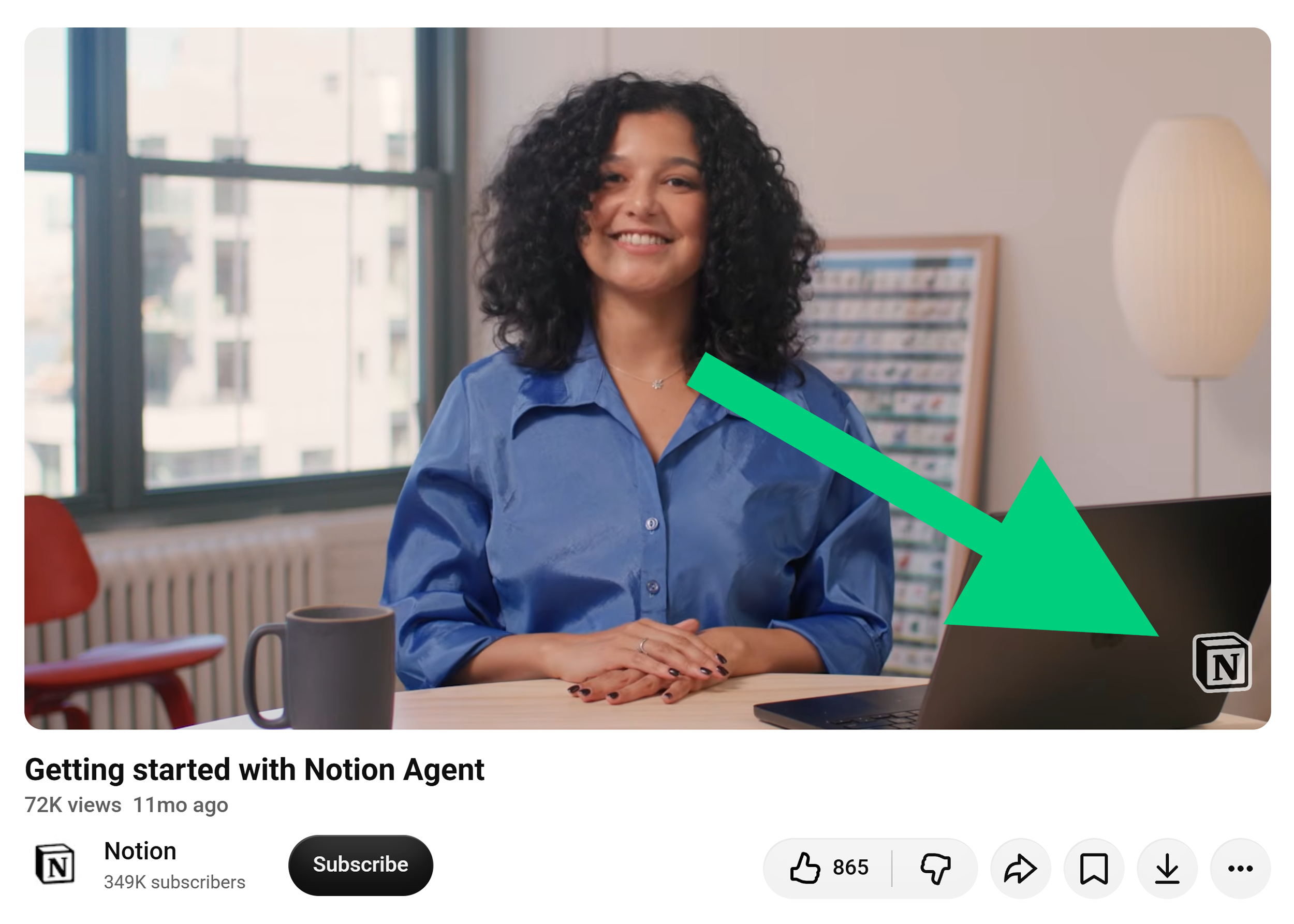
When you upload a new channel watermark, by default it’s set to show up at the end of the video.
But you can adjust this to show the watermark during the entire video, or at a custom start time (like a few seconds after your video starts).
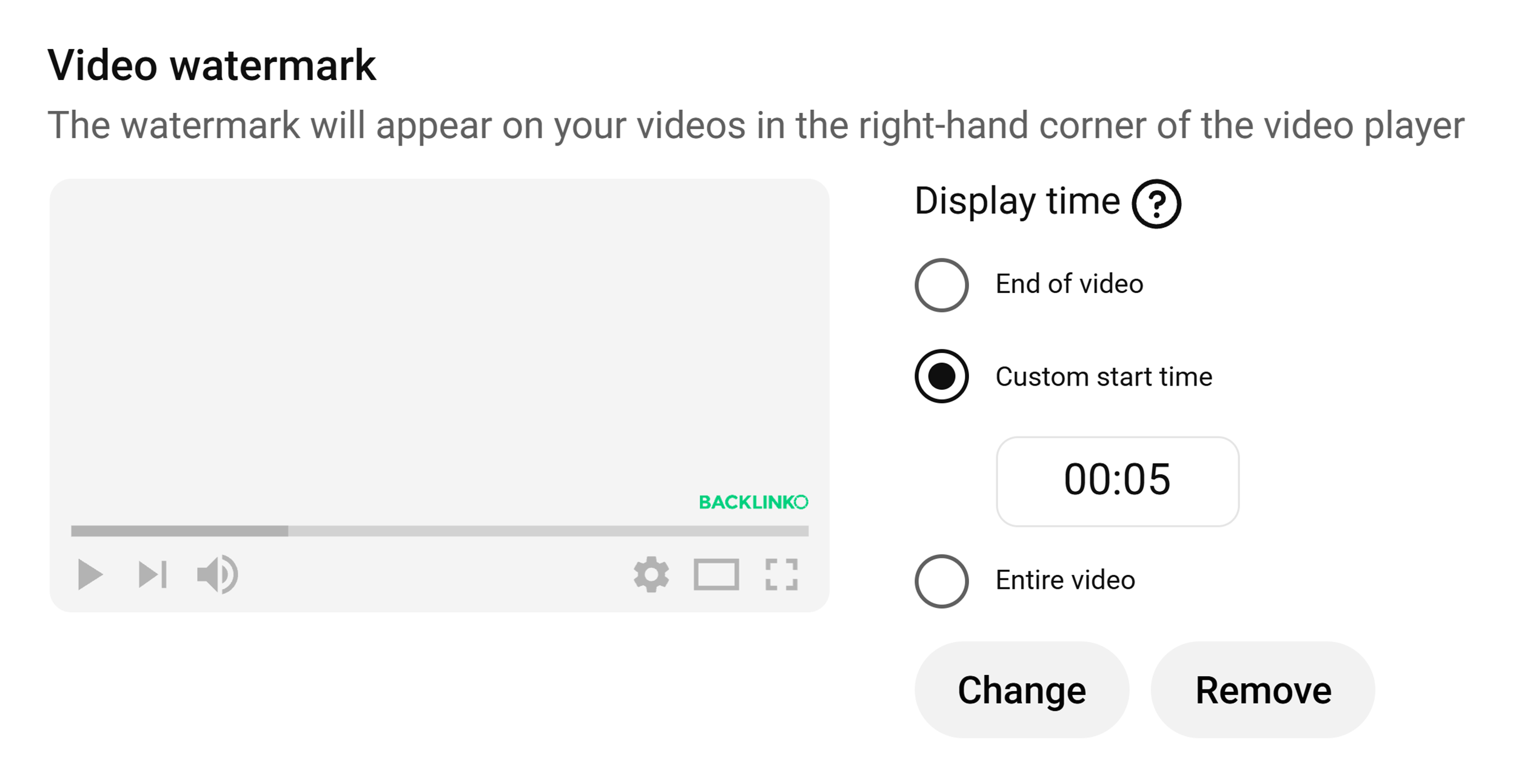
Just head to “YouTube Studio” > “Customization” > “Branding,” then scroll down to “Video watermark.” When you’re done, hit the “Publish” button in the top right corner to save any changes you’ve made.
5. Keep People Watching More of Your Videos
The more of your videos someone watches, the more likely they are to subscribe. Each video builds a little more trust — and trust is what turns a viewer into a subscriber.
Here’s how to build that chain.
First, promote related videos on your end screen. This gives viewers an obvious next watch and keeps them on your channel.
In YouTube Studio, head to the “Video details” page, then look for “End screen” on the right side options.
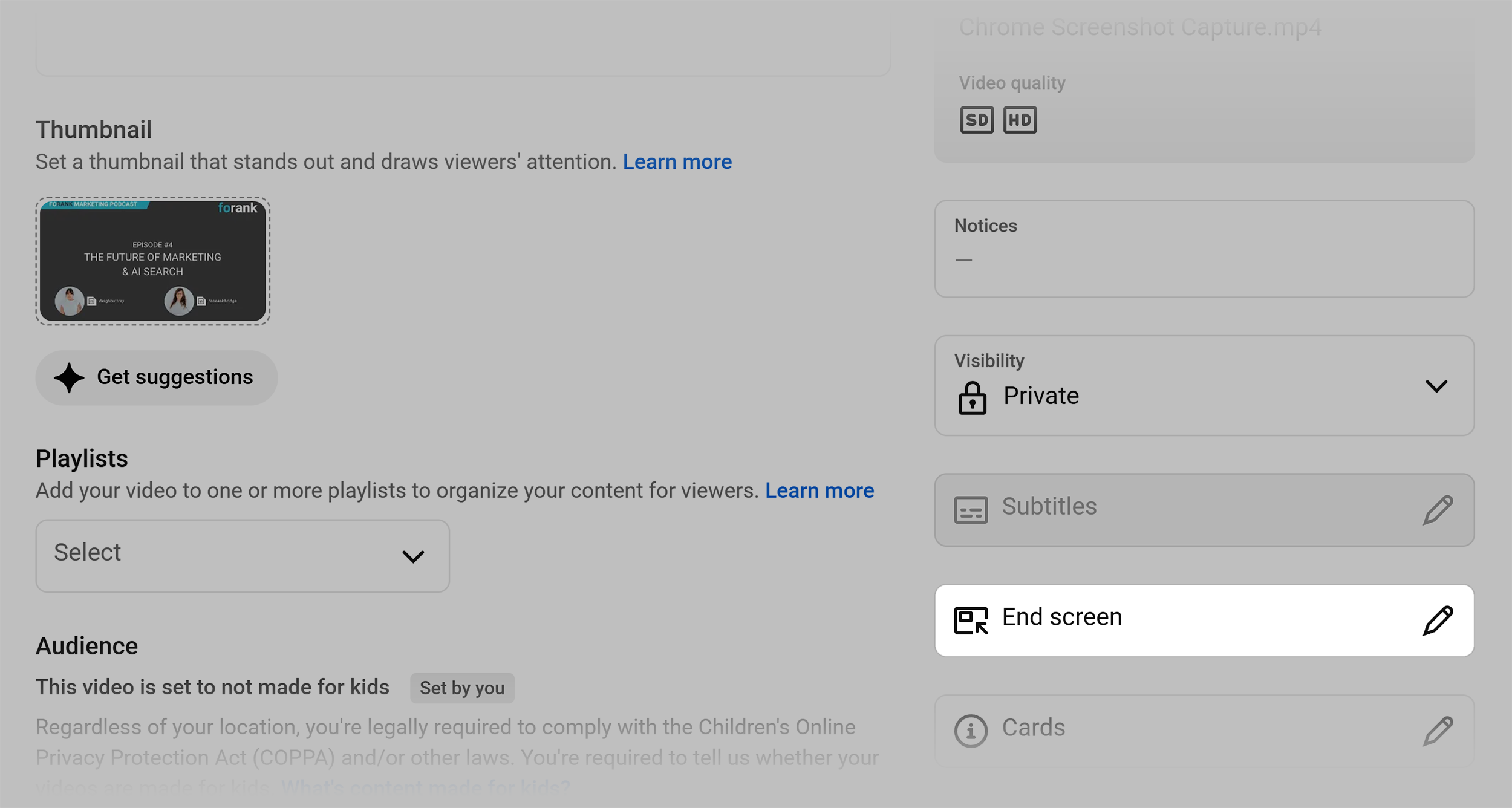
From here, you can add a video or playlist that leads naturally from the current video, or let YouTube choose the best video from your channel for the viewer.
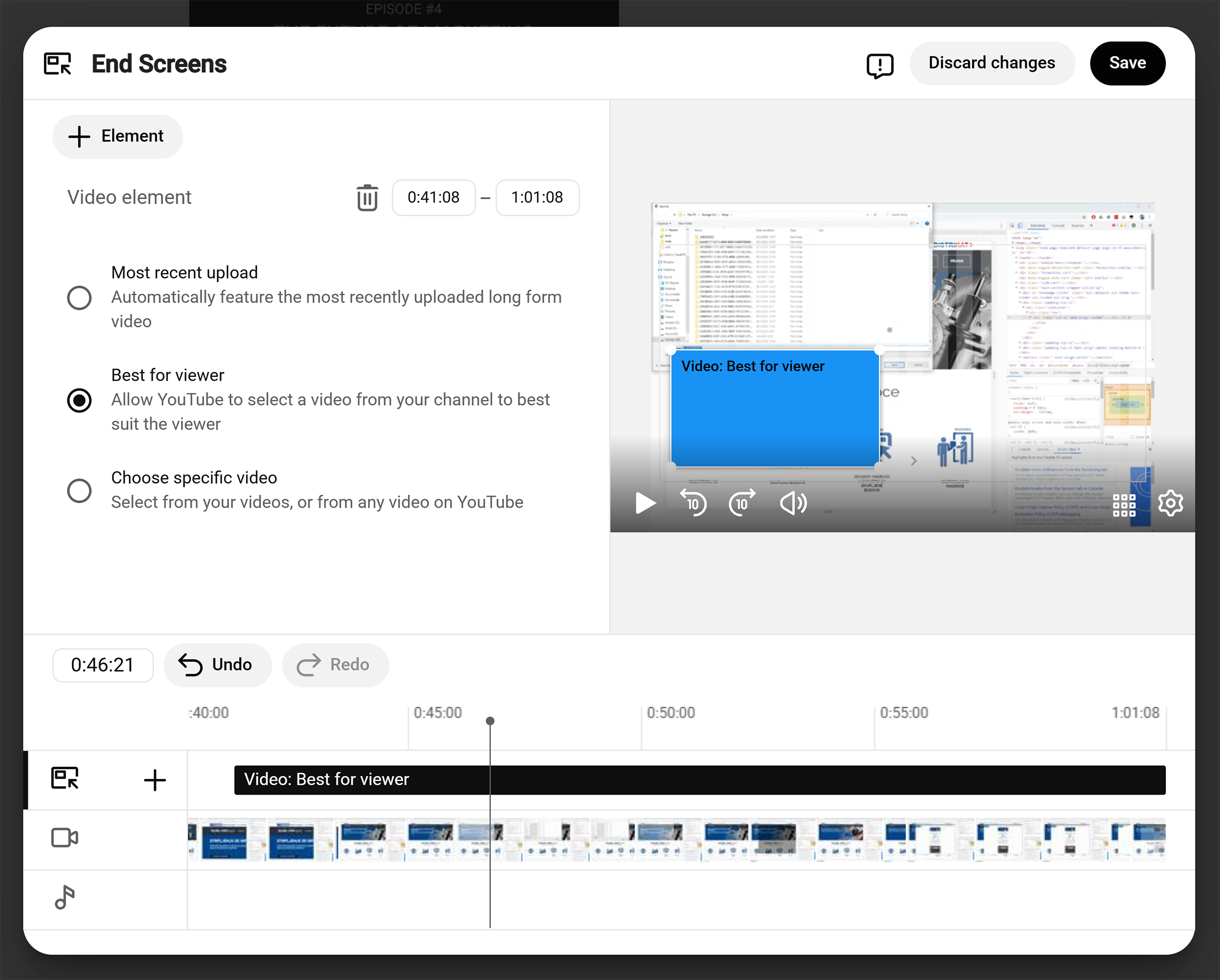
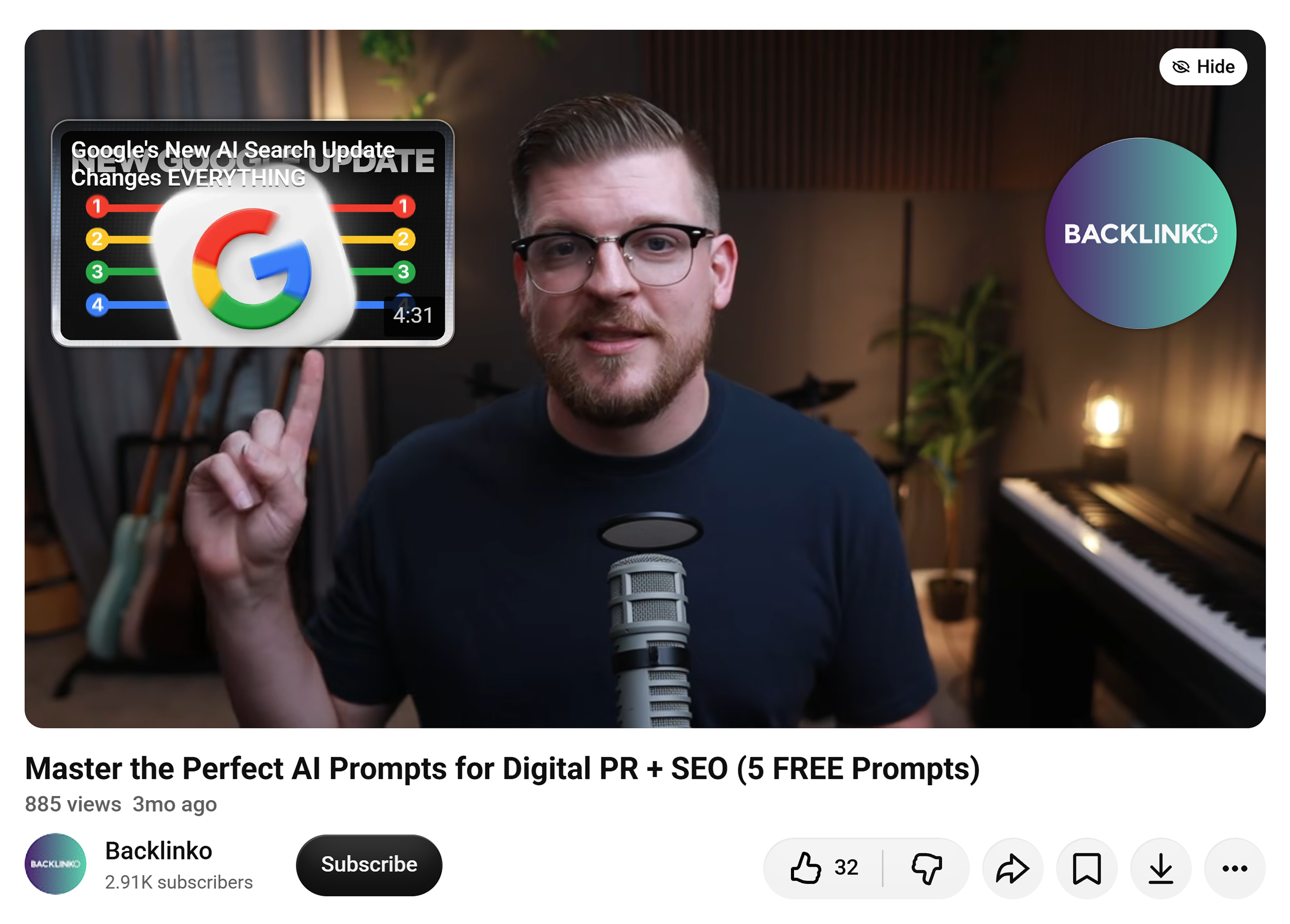
Whenever possible, manually select a specific companion video or playlist.
This allows you to give a direct verbal call-to-action in your outro (e.g., ‘Click here to watch the next step!’), which creates a bingeable viewing path and significantly boosts your end-screen click-through rate.
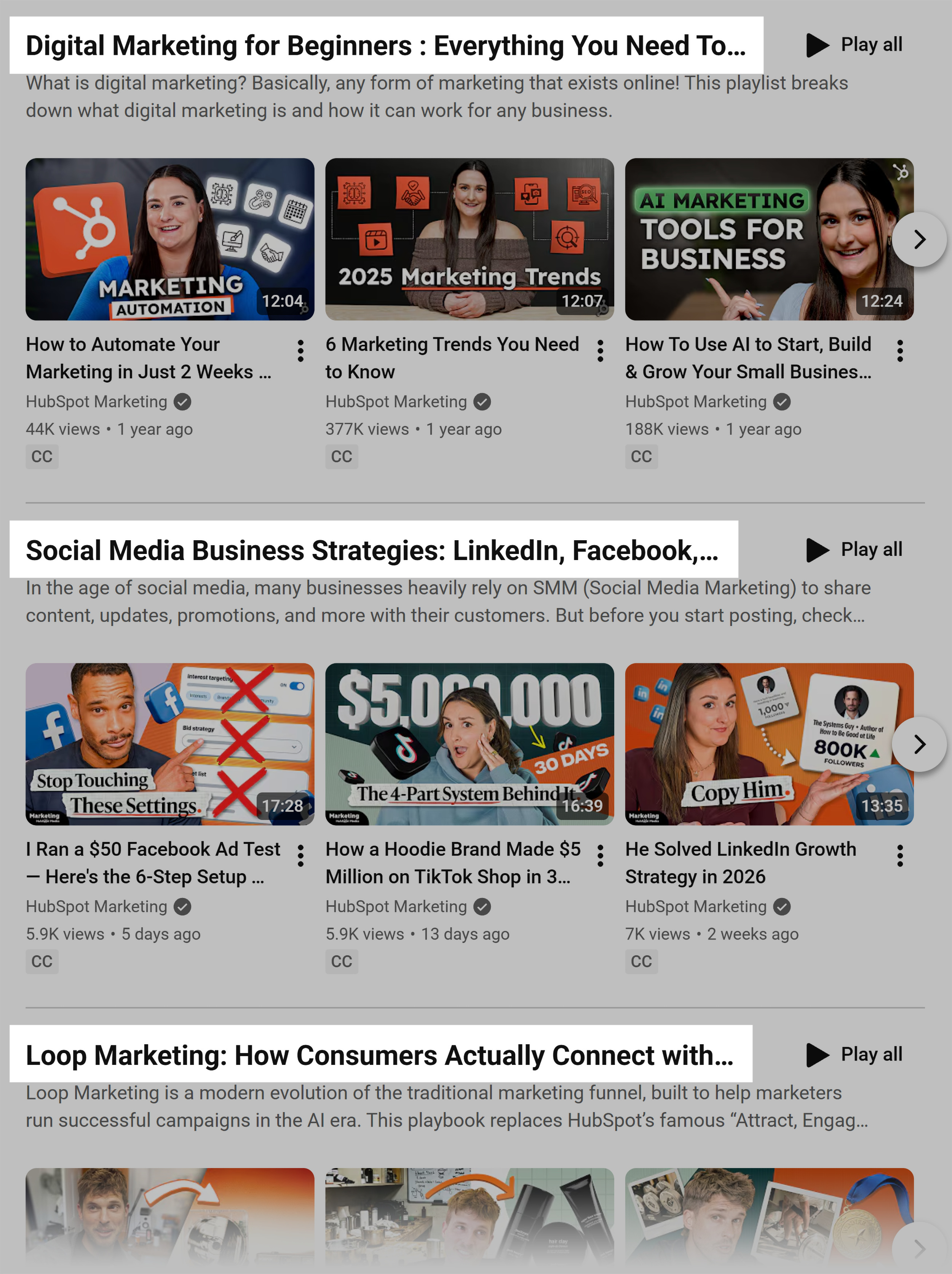
Next, group videos into playlists that encourage people to keep watching.
For example, some channels organize playlists by outcome, not just topic. Like these playlists from HubSpot.
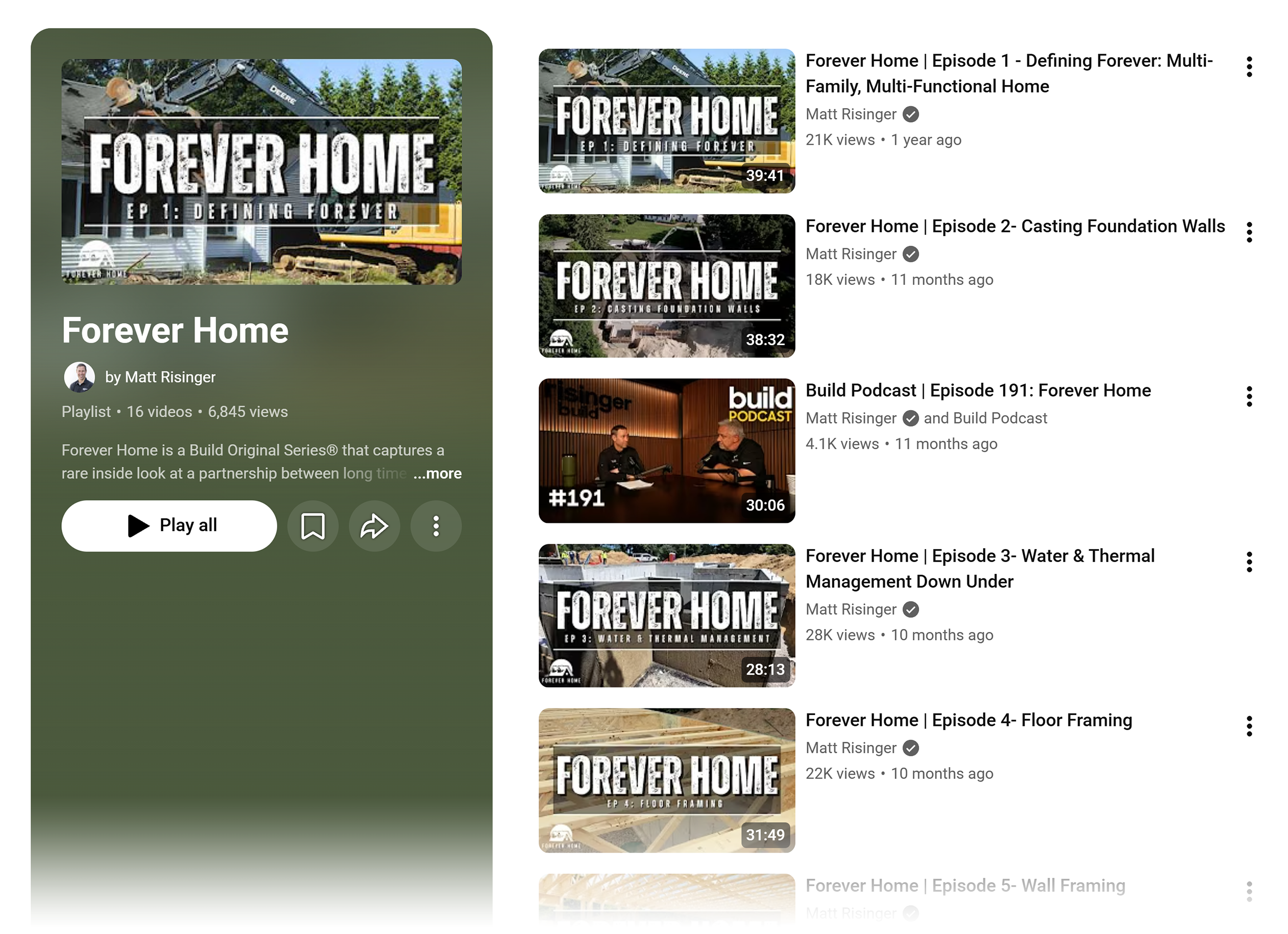
Or, organize playlists into binge-able series, like Matt Risinger’s 12-episode series about building a forever home for a family with special needs.
Lastly, let YouTube help you keep visitors on your videos.
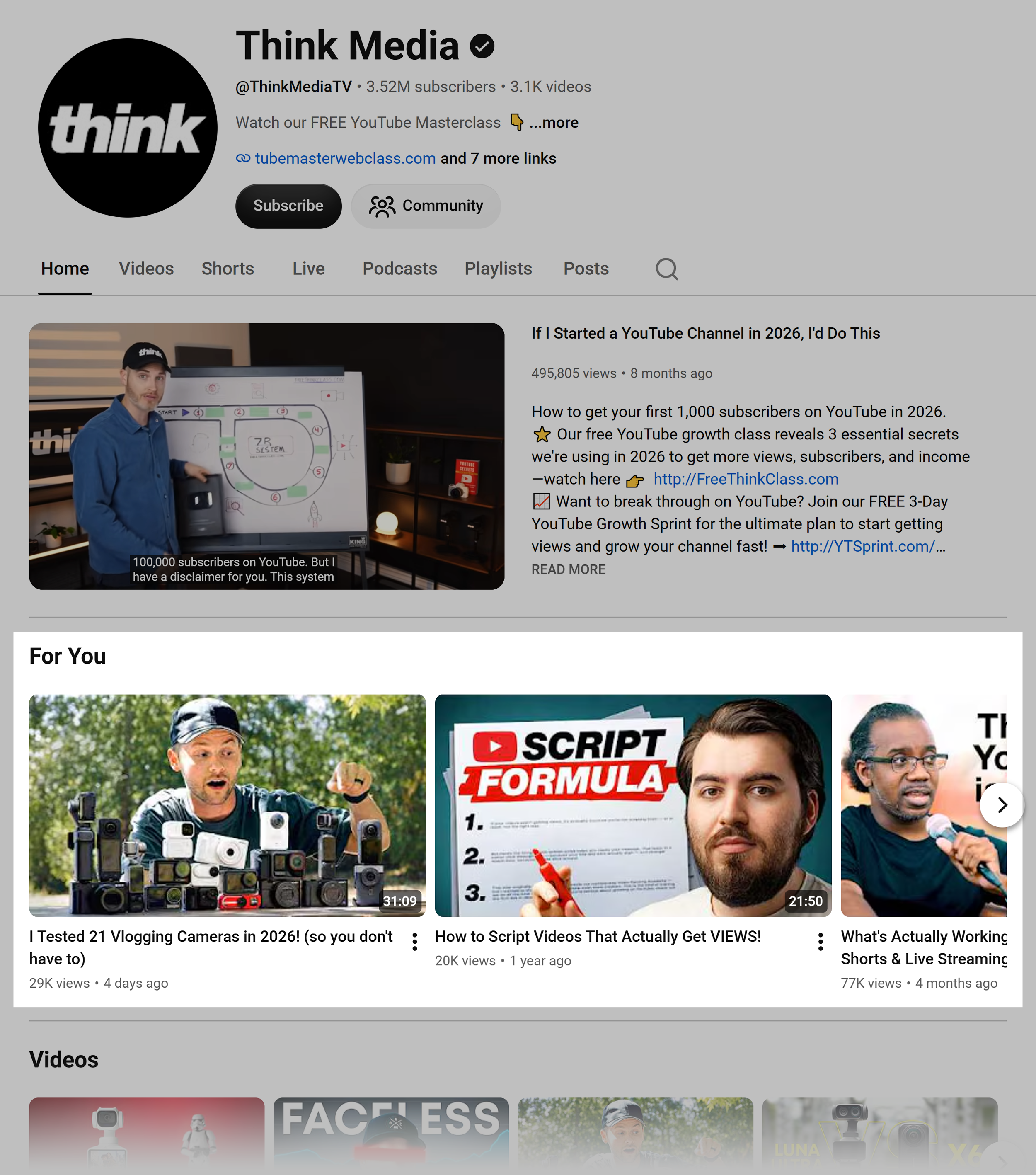
Add a “For You” section to your channel layout, which surfaces a personalized mix of your videos based on what each visitor has already watched.
This is especially handy when you have a large library of videos, like Think Media:
6. Funnel Viewers to Your “Subscribe Magnets”
As your channel grows, you’ll see that some videos turn viewers into subscribers far better than others. Find those, get more eyes on them, and your subscriber count climbs faster.
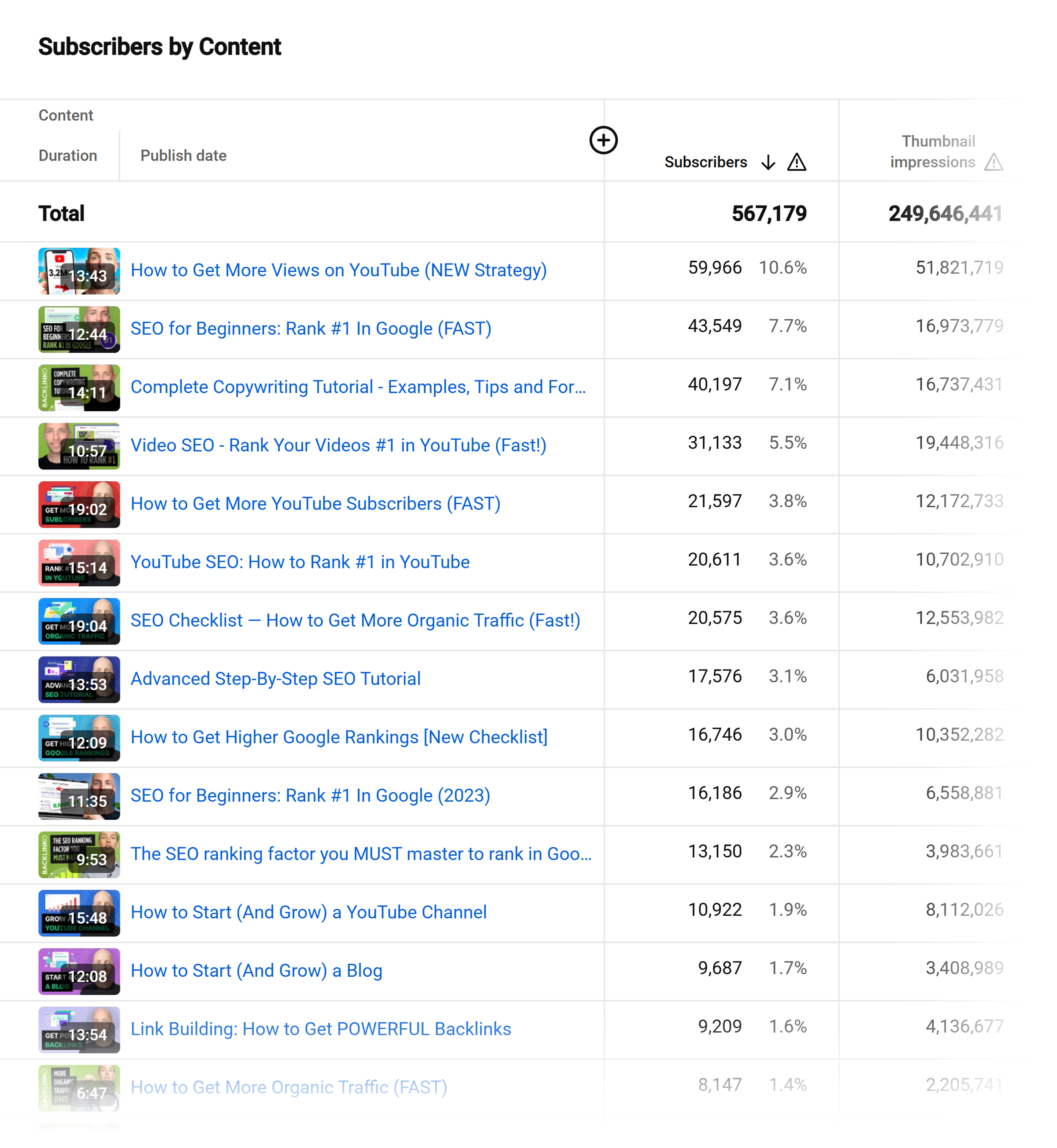
To find these, head to “YouTube Studio” > “Analytics” > and select “Advanced mode” in the top right corner.
That will get you the advanced analytics screen, where you can filter to see subscribers by content. That tells you which videos have gained the most subscribers.
Once you know which videos are your subscriber magnets, you can:
- Feature them in your end screens
- Start a playlist with them
- Promote them in cards (the clickable “i” icon notifications that pop up during a video) in related videos
You could even make your subscriber magnet your channel trailer, so your best-converting video greets every new visitor.
Your subscriber magnet may change as you publish new content, so check back every month to keep steering traffic to whatever’s converting best right now.
7. Ask Viewers to Subscribe (The Right Way)
The days of shouting “smash that subscribe button” within the first 10 seconds of your video are over. (Phew.)
But that doesn’t mean you shouldn’t ask people to subscribe to your channel. All you need to do is give them a reason.
That’s why many of today’s biggest creators opt for low-pressure subscription CTAs toward the end of their videos.
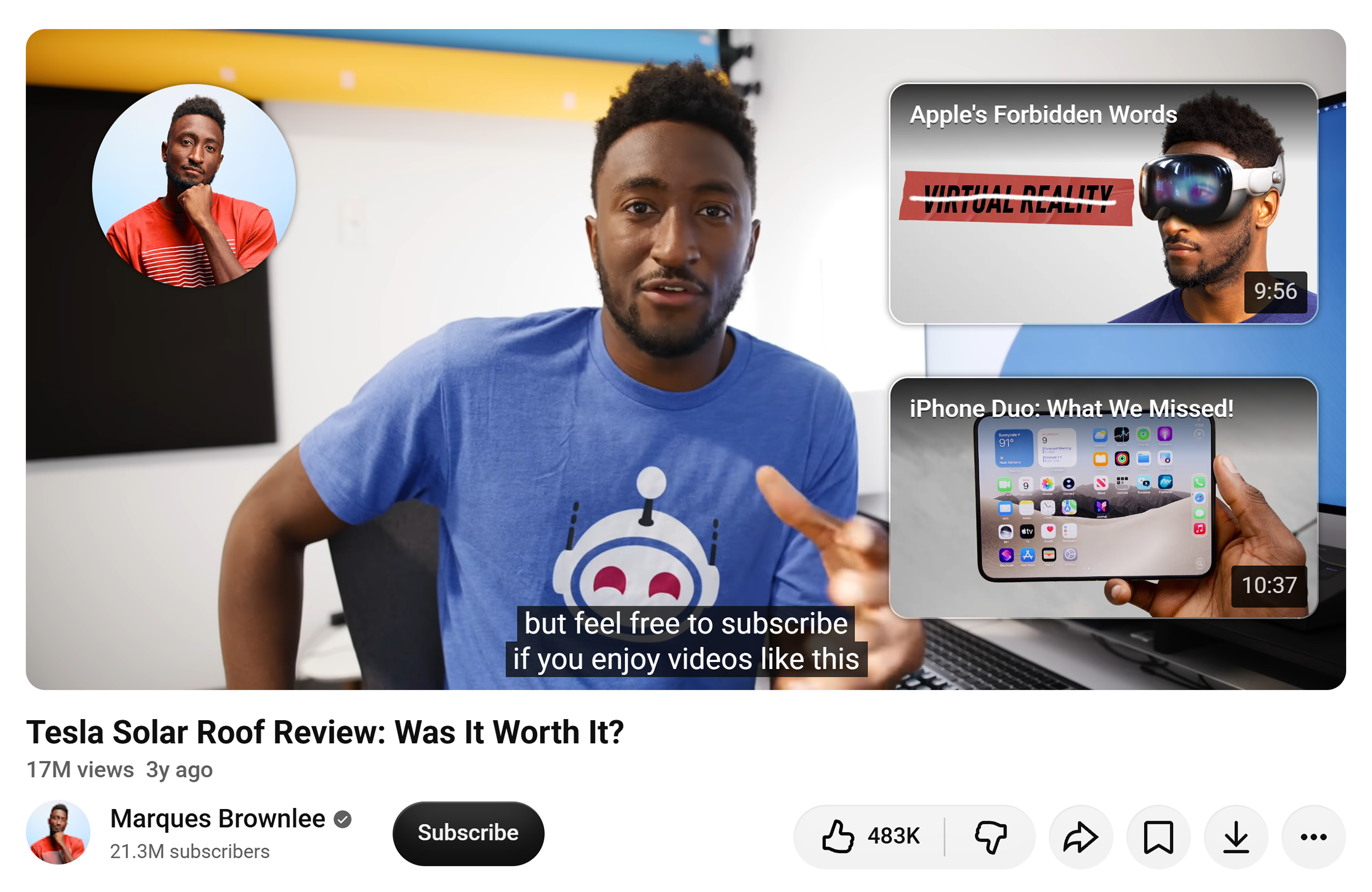
For example, a video from tech reviewer Marques Brownlee ends like this:

“Feel free to subscribe if you enjoy videos like this and the amount of work that goes into these videos on bleeding-edge tech.”
Brownlee has already earned the subscribe with his in-depth breakdown of Tesla’s Solar Roof.
At this point, asking the viewer to subscribe doesn’t feel pushy, it just feels like a natural next step.
Diandra Escobar takes a slightly different approach in her videos.
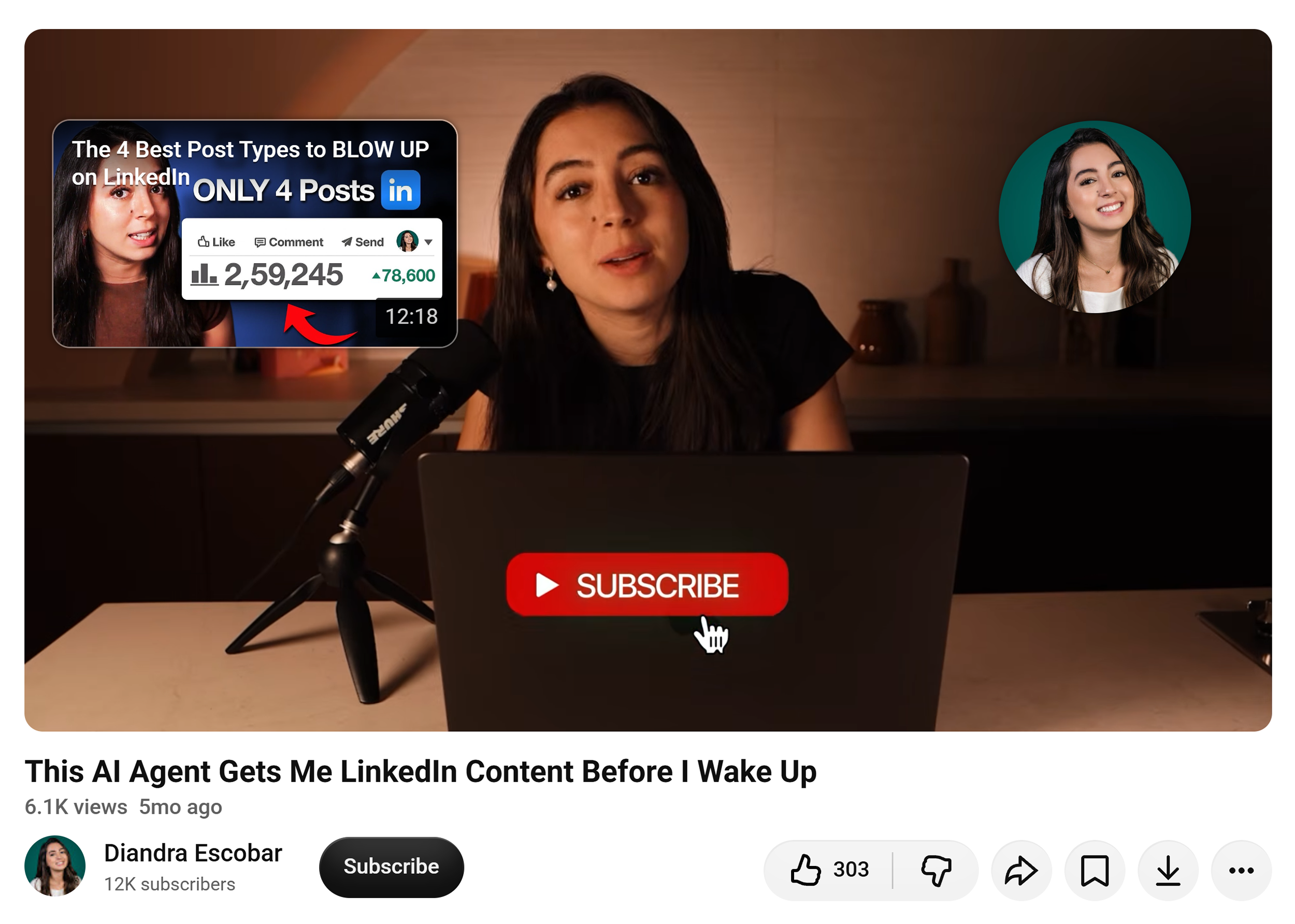
At the end of a really useful video, her subscribe CTA explained to viewers exactly what to expect from her channel.

“Subscribe if you haven’t. Every week, I’m breaking down what’s actually working for B2B brands on LinkedIn right now.”
Once you’ve earned the right to ask, here are some simple subscribe CTA scripts you can use.
- “If you found this helpful, consider subscribing. I post [specific type of content] every [day/week], so you won’t miss the next one.”
- “This is part one. In the next video we’re covering [next piece of the same topic], so subscribe if you don’t want to miss it.”
- “If you want more [specific outcome], that’s basically all I post here. Subscribe to get the next one as soon as it goes live.”
Say it once, and keep it short and friendly.
8. Promote Your YouTube Channel and Videos
New subscribers don’t only come from YouTube. If you have fans who follow you on other channels, tap into that existing audience.
Treat every piece of content you make as a doorway to your YouTube channel. That includes blog posts, podcast episodes, newsletters, and social posts.
For example, Backlinko promotes their best videos through their email newsletter.
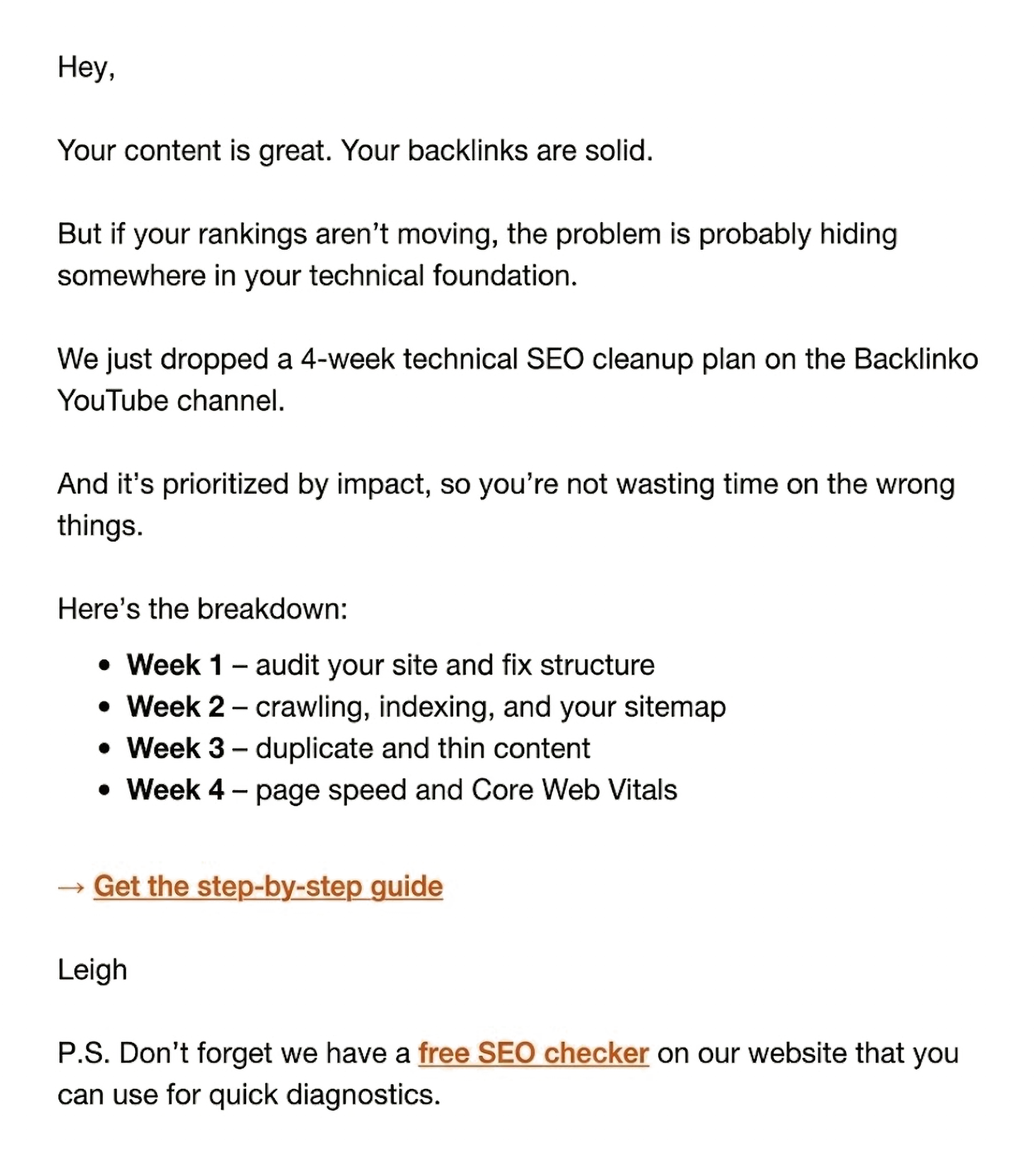
And we also embed relevant YouTube videos into blog posts.

This is a great way to meet people where they are, and give them a relevant reason to follow you to your YouTube channel.
Another great way to promote your channel is by using Shorts on YouTube. While they may not excel at building follower count by themselves, Shorts are great for exposure.
So, treat Shorts as top-of-funnel, a way to get in front of new people and build awareness.
Ali Abdaal does this by posting Shorts that summarize one idea from his longer videos.
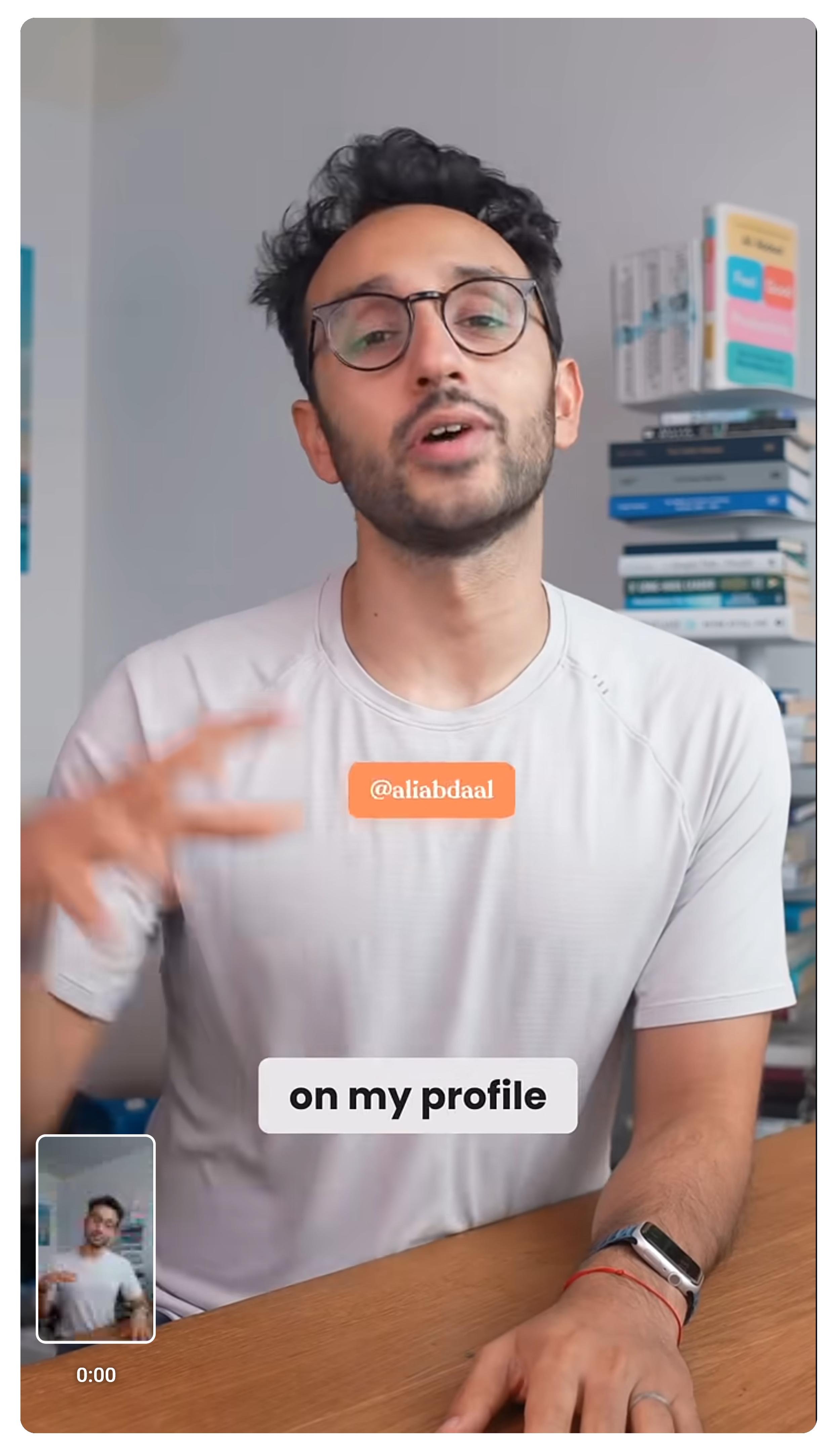
He gives enough information for the Short itself to be interesting, but leads the viewer into one of his longer videos by mentioning it at the end, and adding a native “Related Video” link.
9. Build a Community With Your Subscribers
You can shout information into the ether and hope some people follow along. Or, you can build a space to interact with your audience and make them feel like they’re part of something.
Those are the channels that stand out in 2026.
The good news is that YouTube is continuing to build new ways to create that kind of connection with your audience. Here are a few ways to get started.
First, reply to comments and heart the good ones. This is the simplest lever, and it matters most within the first 24-48 hours after publishing, when early engagement signals to YouTube that your video is worth showing to more people.
Next, try using Posts between uploads. Use the Posts feature to share polls, quizzes, and images. It keeps you top of mind, and lets you test ideas before you film.
For example, homesteading creator Anja from Our Gabled Home uses Posts in between videos to talk with her audience.
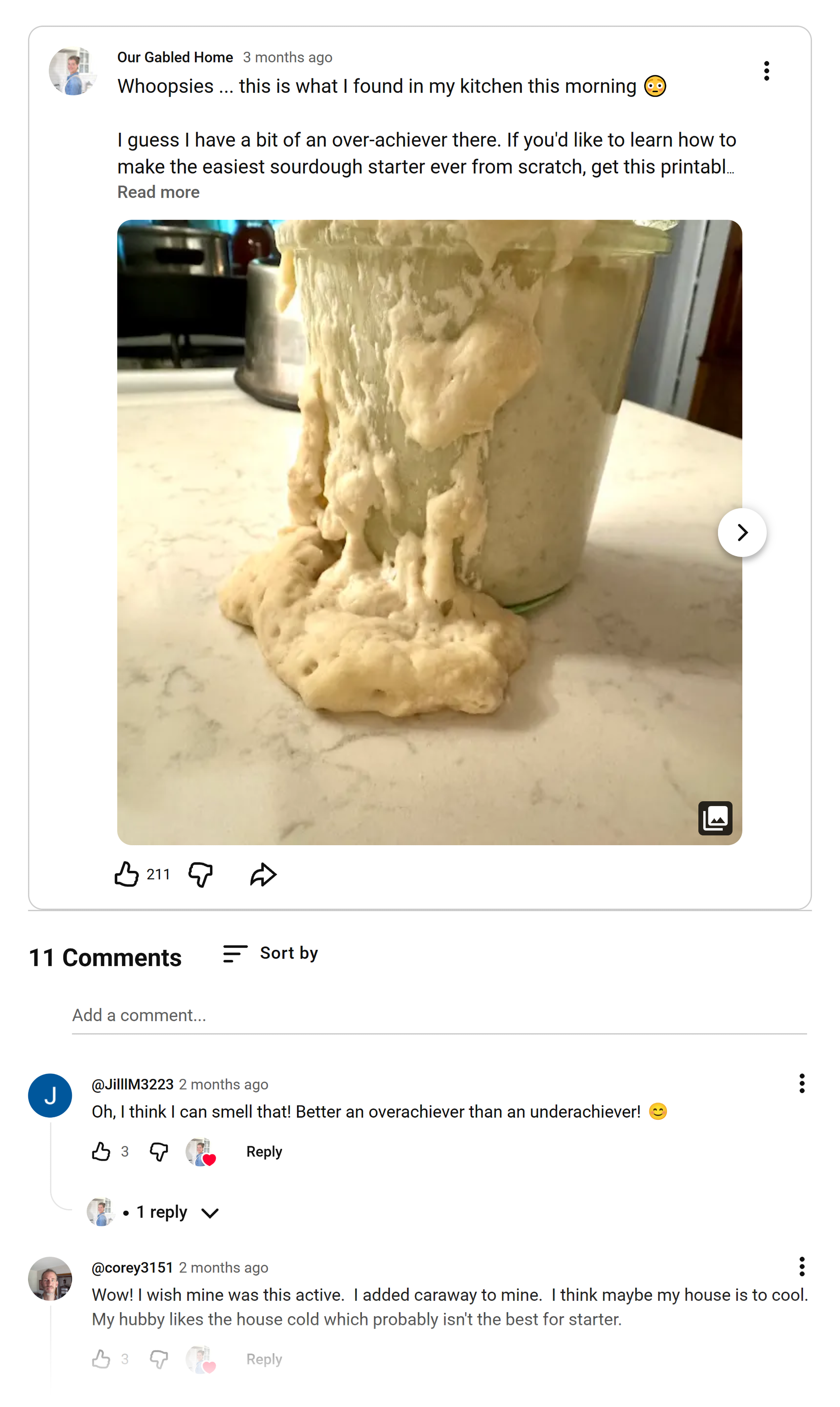
As you start to grow, you can also turn on Communities. YouTube’s Communities feature gives your subscribers a place to post and talk to each other on your channel, not just react to you. It turns a following into an actual community.
If it fits, try going Live. Live streams (with real-time chat, polls, and Q&As) let you connect with people in the moment.
YouTube creator Nick Nimmin does this with regular “Nimmin live” videos, where he goes live to answer questions from the community.
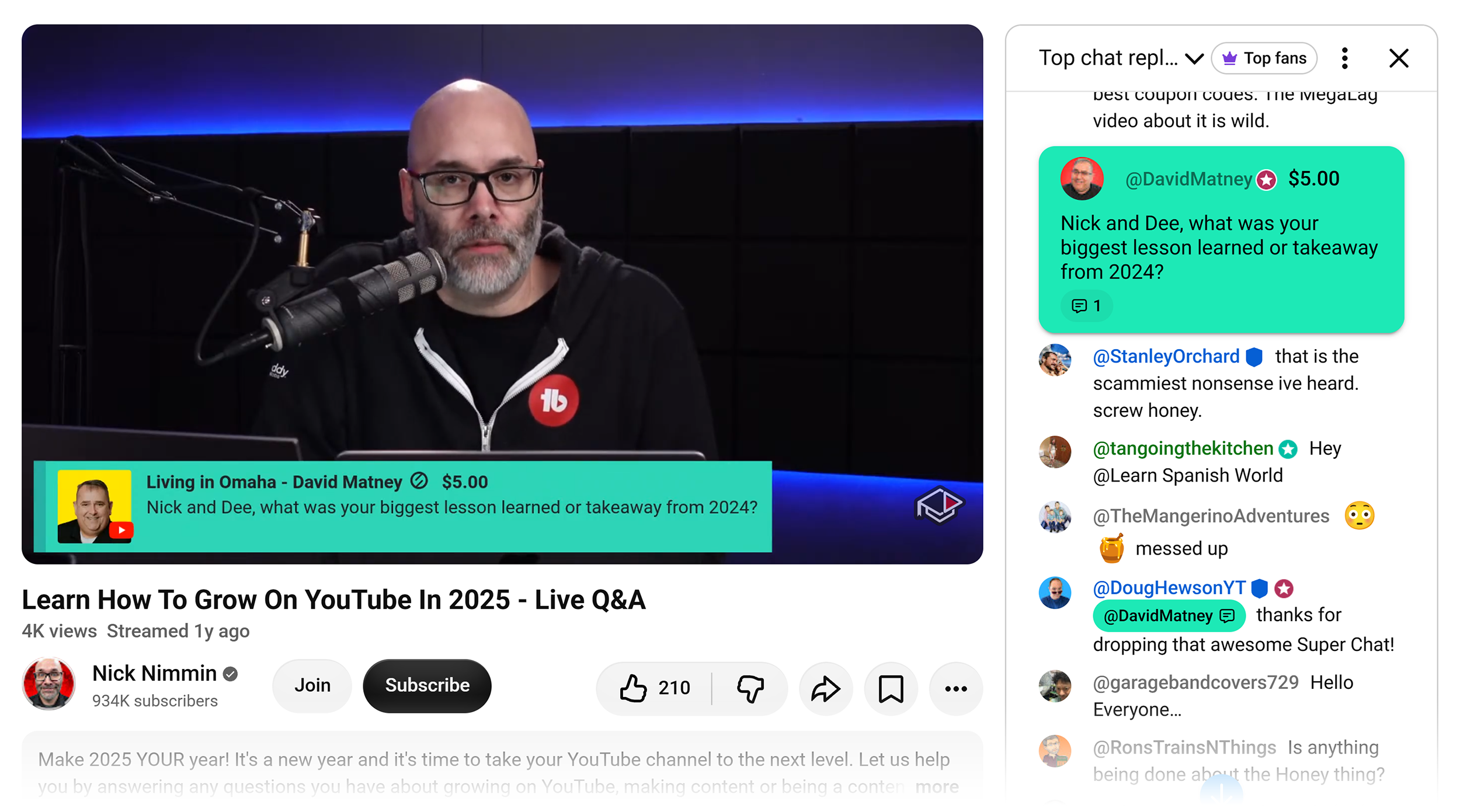
He uses native YouTube live features, which allows him to queue up questions from the audience and pin them on the screen so new viewers have context on what’s being discussed.
Next, once you hit 500 subs and the required watch time, you’re eligible to unlock Channel Memberships on YouTube. This lets your biggest fans pay a monthly fee for perks like badges, exclusive posts, and members-only livestreams.
Another way to grow community (and subscribers) is to collaborate with adjacent creators. Partnering with someone whose audience overlaps yours puts your channel in front of new people already primed to care.
For example, street photographers Matej Sefcik and avdidit did a collaboration video where they swapped cameras for a day in New York City.
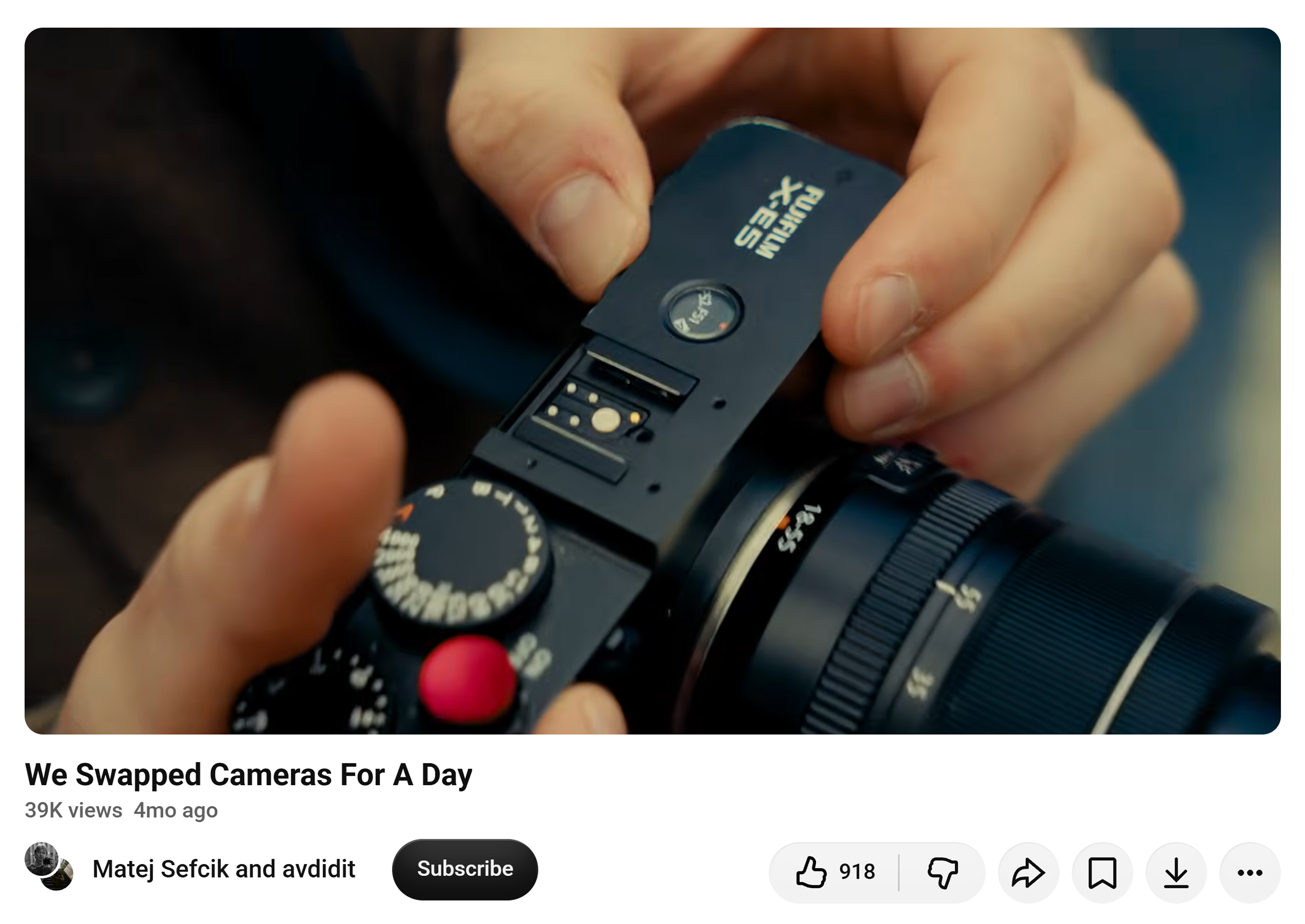
They filmed their shooting process, compared color science and handling, and shared the final edited shots in a co-hosted video.
Working together with another creator in your space isn’t competing. Actually, it’s a way for both of you to get exposure to a hyper-targeted audience who already enjoys that exact style of content.
Finally, keep the space healthy. As you grow, use YouTube’s moderation tools, like holding posts for review, adding trusted moderators, or requiring a minimum subscribed time before fans can post. This keeps the community welcoming.
But remember, sometimes the best opportunities to build community are outside YouTube.
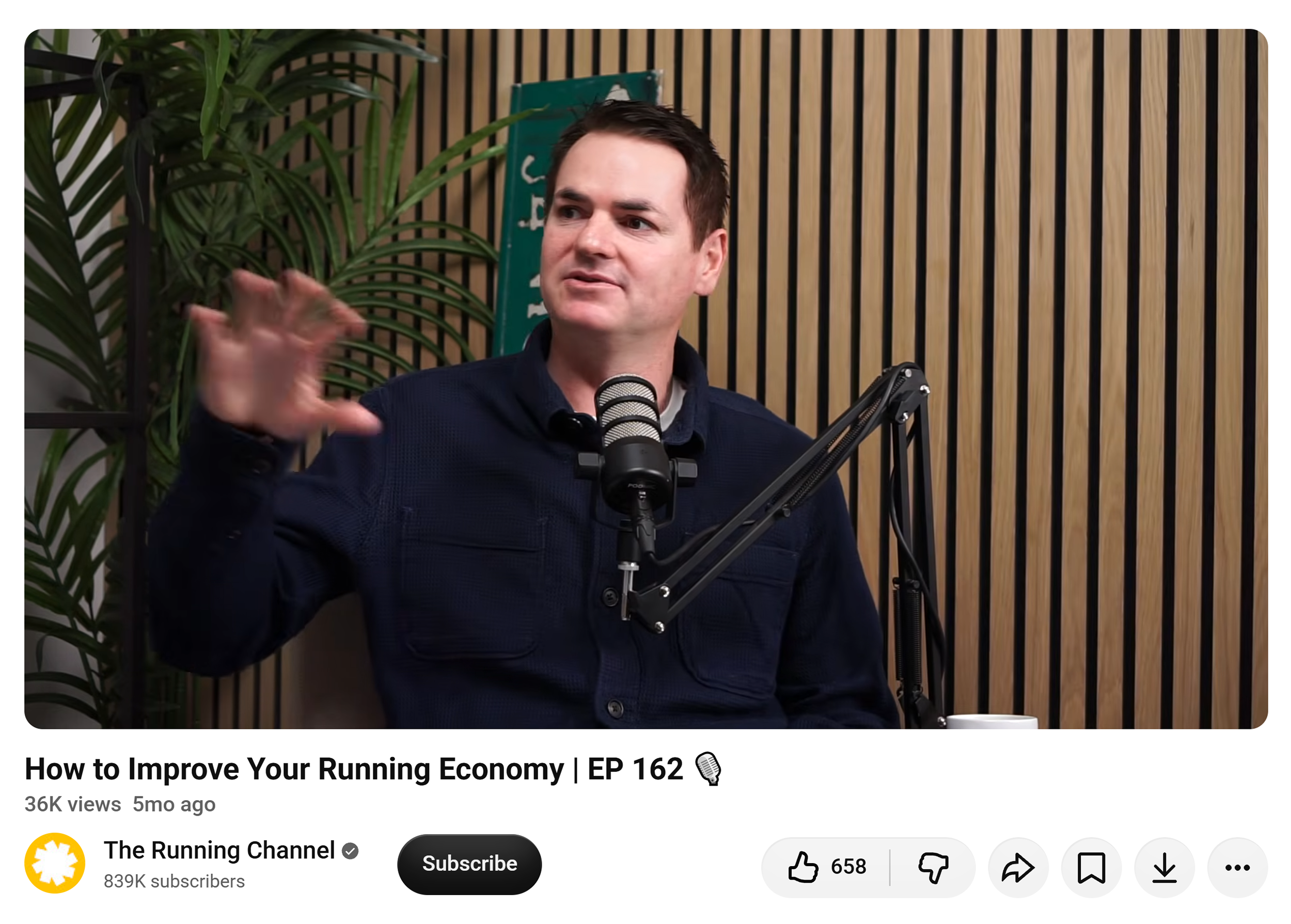
For example, The Running Channel saw the opportunity beyond YouTube. First, they noticed their comments section was active, and the team does a great job of hearting and replying to comments there.
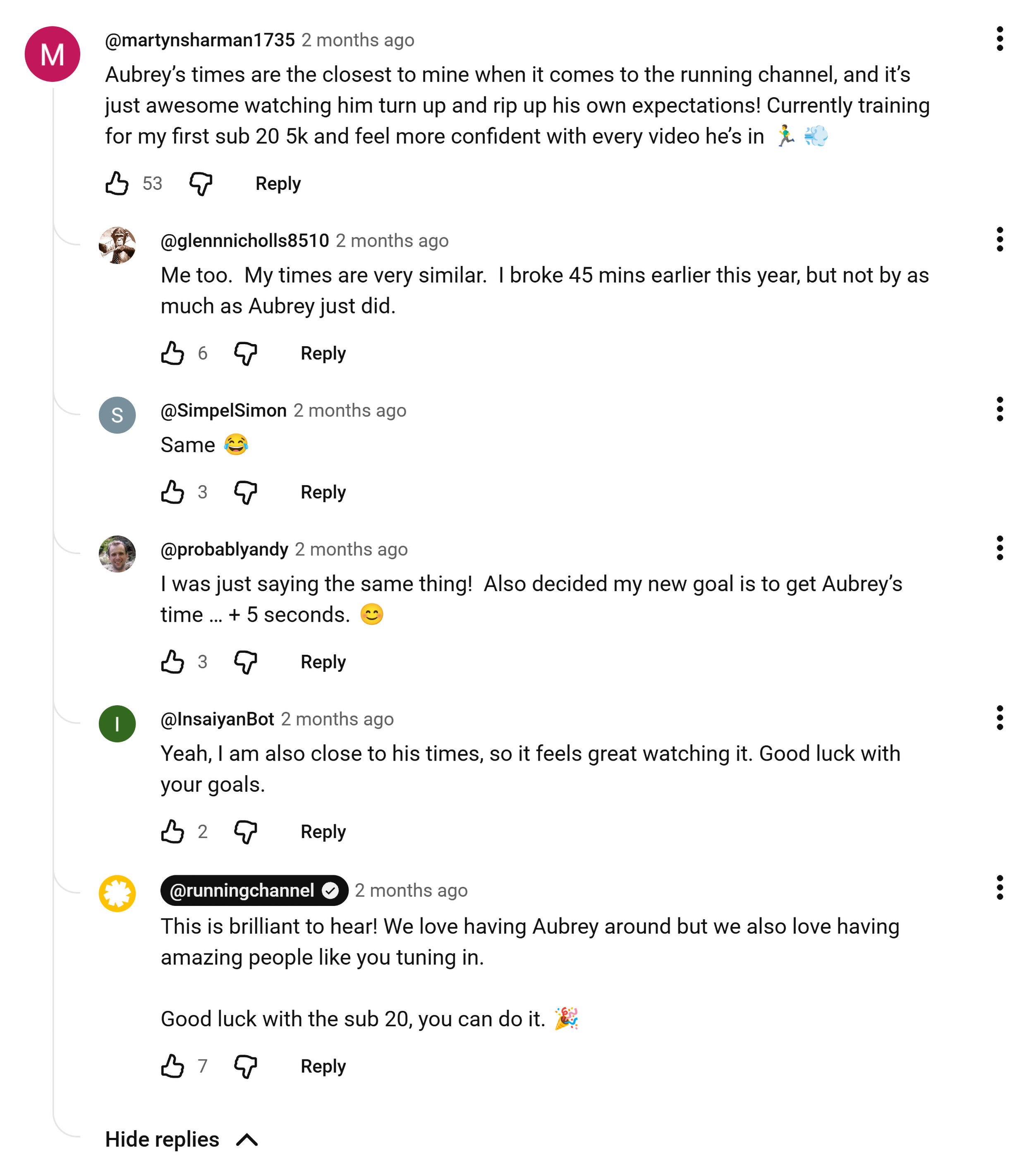
But they grew that same community outside YouTube.
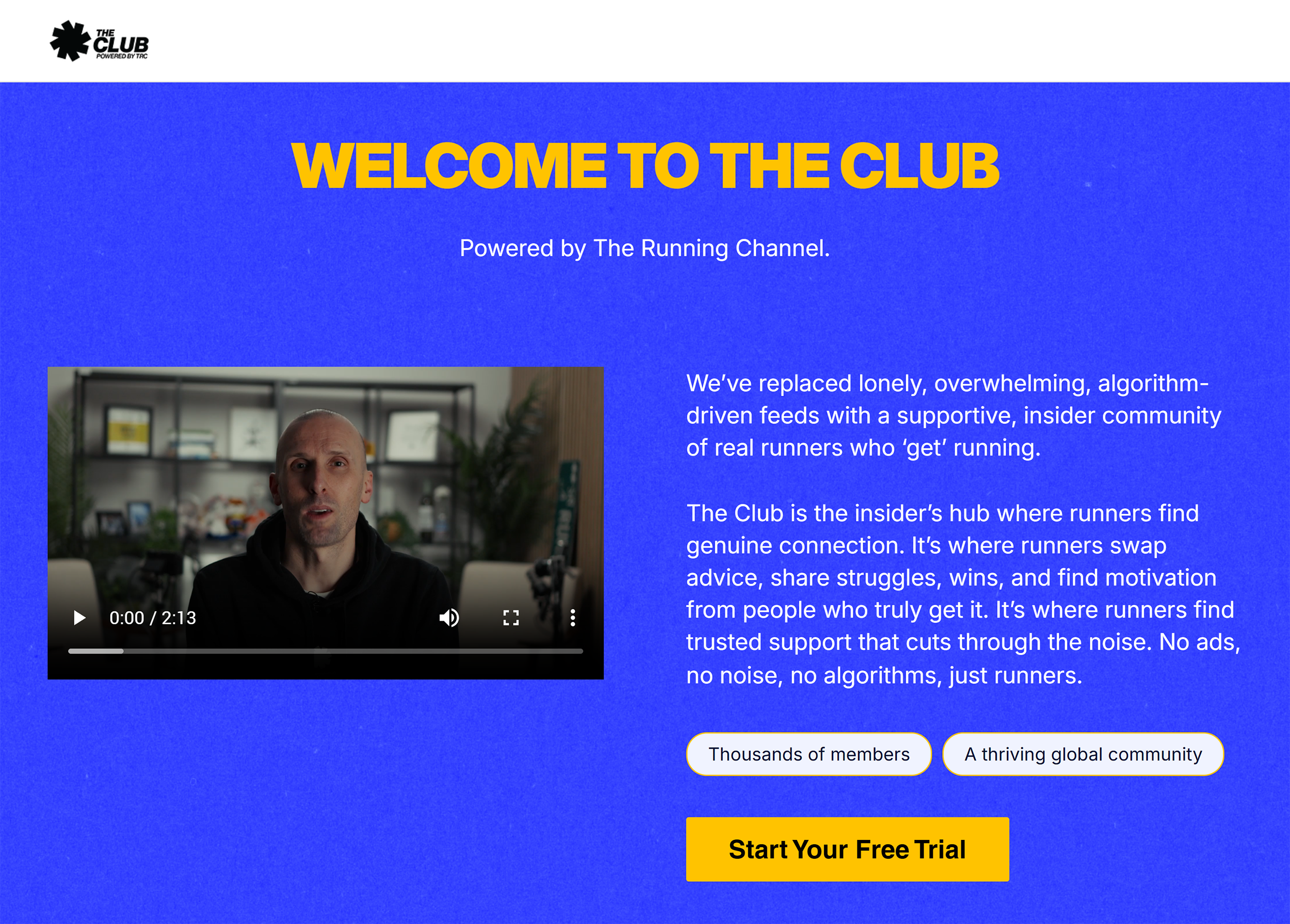
They have a paid membership club where their audience can learn from each other and get exclusive content.
And they even build community offline by organizing in-person group runs and meetups.
Of course, not every YouTube creator can run in-person events. But find the opportunities to build community with your audience, whether it’s through paid memberships, Reddit threads, or forums and communities like Discord.
That’s the kind of connection a subscribe button just can’t give you.
Turn Subscribers Into a Community That Compounds
A big subscriber number on your channel won’t do much on its own, and chasing a number just for its own sake is a fast way to burn out.
But when you show up consistently, make videos worth watching, and give people a reason to connect, you’ll build a loyal audience.
None of this can happen overnight. Pick a few strategies from this list, and put in the work each week. The results will build slowly at first. But that work compounds over time.
Of course, subscribers are only half the equation. The other half is getting people to watch your videos in the first place.
For that, check out our guide on how to get more YouTube views.
Backlinko is owned by Semrush. We’re still obsessed with bringing you world-class SEO insights, backed by hands-on experience. Unless otherwise noted, this content was written by either an employee or paid contractor of Semrush Inc.